
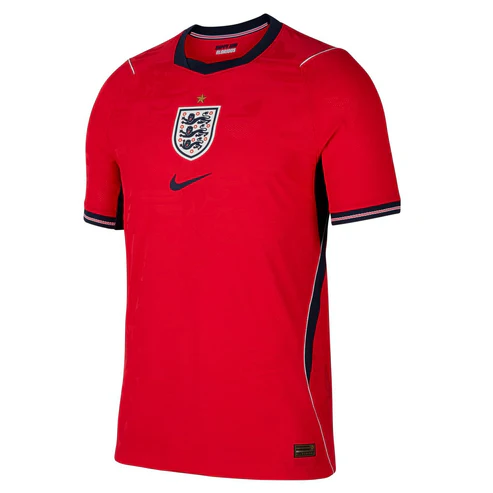
England’s white shirt is one of the most recognised national team kits in world football. A plain white shirt, navy shorts and the Three Lions crest say everything before a ball is kicked. If you want a fan-inspired England shirt to wear while you follow the team, you can browse the England 2026 World Cup Jersey in the ElevenKick shop. This guide explains where the white shirt came from, how it has changed, and why it still matters to fans today.
England’s home colours have stayed remarkably simple for a very long time. White has been the team’s home colour since the earliest days of international football, when England played Scotland in the first official international match in 1872. In those early years, kits were plain and practical, with little of the branding and pattern work seen today. The simplicity became the point. White stood out on the pitch, it photographed clearly, and it gave England an identity that did not need to change with every fashion cycle.
That tradition is part of why the shirt still feels classic. Many national teams have changed their home colours or added bold patterns over the years. England have kept white at the centre, with navy, red and light blue used as trim and for away shirts. A fan can pick up an England shirt from almost any era and recognise it at once, even if the collar, fabric and badge details are different.
The crest is just as important as the colour. The Three Lions have been associated with England for centuries, and the badge on the shirt carries that history in a small, proud emblem. Above the lions, a single star marks England’s World Cup win in 1966, when the team lifted the trophy on home soil at Wembley. That star is a reminder of the team’s greatest day, and it is one of the first details fans look for on a new shirt.
Over the years the crest has been redrawn, simplified and restyled, but the lions have remained. On modern fan-inspired shirts, the crest is usually printed or embroidered in the centre of the chest or on the left side, depending on the design of the season. Either way, it is the detail that turns a plain white shirt into an England shirt.
No story of the England shirt is complete without 1966. England hosted the World Cup that summer, and the team reached the final at Wembley. The white home shirt from that tournament is now one of the most famous shirts in football history, not because of a complicated design, but because of what it represents. It was a simple shirt, worn in a famous summer, by a team that gave English football its defining moment.
Collectors still seek out shirts inspired by that era. The appeal is not about recreating a single match in detail. It is about the feeling of that summer: a home tournament, a packed Wembley, and a team that became part of national memory. A 1966-inspired shirt works as a piece of football history as much as a piece of clothing, and it pairs well with the modern white shirt for fans who like to show the full story.
After 1966, the England shirt went through the same changes as the rest of football. Collars came and went, from simple crew necks to polo collars and back again. Fabrics became lighter, fits became closer, and manufacturers added subtle patterns, such as faint geometric prints, tonal stripes and textured panels. The away shirt also became a bigger part of the story, with red emerging as England’s most familiar second colour, alongside navy and light blue versions in different years.
The 1990s brought bolder designs, including shirts with larger collars, brighter trim and more visible patterns. England’s runs at major tournaments in that decade, including a home European Championship in 1996, gave those shirts a lasting place in fan memory. Later shirts returned to cleaner designs, with slim fits, simple collars and restrained trim, which is why many modern England shirts feel easy to wear away from the stadium as well as at a match.
In recent years, England have again become regular contenders at major tournaments, reaching the later stages and giving fans plenty of reasons to wear the shirt. The team reached the final of the European Championship at Wembley in 2021, played as Euro 2020, and have remained a strong side in the years since. Those runs have made the white shirt a familiar sight in pubs, parks and living rooms during tournament summers, as well as in the stands.
Looking ahead to the 2026 World Cup, which has not yet been played, the white shirt carries the same hopes as ever. Fans are not buying a shirt for a result that has not happened. They are buying into a tradition: white, navy trim, the Three Lions, and the hope that this tournament will add a new chapter. That is the right way to think about any preview shirt. It is a shirt for the build-up, for watching with friends, and for supporting the team, whatever the tournament brings.
When you choose a fan-inspired England shirt, start with the basics. Check the shade of white and the trim colours, because small changes in navy and red trim change the whole look. Look at the collar, which can make a shirt feel classic or modern. Check the crest, which should be clear and well placed, and look at the fit. Most modern fan-inspired shirts use a comfortable replica fit that runs true to size, which makes them easy to wear for a full match day.
Think about how you will wear it, too. A white shirt shows marks more easily than a dark shirt, so it is worth following the care label and washing it cold and gentle, as with any light-coloured jersey. For match days, pair it with jeans or navy shorts and simple trainers. For a smarter look, layer it under an open jacket or a navy overshirt, so the white and the crest still show. The simplicity of the England shirt is what makes it so easy to style.
England’s red away shirt deserves its own mention. Red has been the team’s most famous away colour for decades, and it has its own history at major tournaments. A red England shirt is bolder than the white home shirt, and it works well for fans who want something that stands out in a crowd. Some fans collect both, wearing white at home games and red for away days, while others pick the colour that suits them best and wear it everywhere.
Whichever colour you choose, the identity is the same. The Three Lions, the star, and the simple, confident design are what make it England. That is why the shirt has survived so many changes in football fashion. It does not need a loud pattern to be recognised. It needs white, or red, and the crest.
The England shirt matters because it connects generations of fans. Grandparents, parents and children have all worn versions of the same white shirt, even if the fabric and the collar were different. It is a shirt for tournament summers, for qualifying nights, for friendly matches in the park, and for wearing at home while watching on television. It is also a shirt that works beyond football, because its design is so clean.
For collectors, the England shirt is a good place to start a national team collection, because the story is clear and the colours are timeless. For new fans, it is an easy first shirt, because it goes with almost anything and it is instantly understood. For long-time supporters, it is a way to carry a piece of football history that is still being written.
Browse the ElevenKick shop to find the England shirt and the rest of the range, and pick the version that suits your match-day style best.
We use cookies to improve your experience on our site. By using our site, you consent to cookies.
Manage your cookie preferences below:
Essential cookies enable basic functions and are necessary for the proper function of the website.
These cookies are needed for adding comments on this website.
Statistics cookies collect information anonymously. This information helps us understand how visitors use our website.
Marketing cookies are used to follow visitors to websites. The intention is to show ads that are relevant and engaging to the individual user.
You can find more information in our Cookie Policy and .