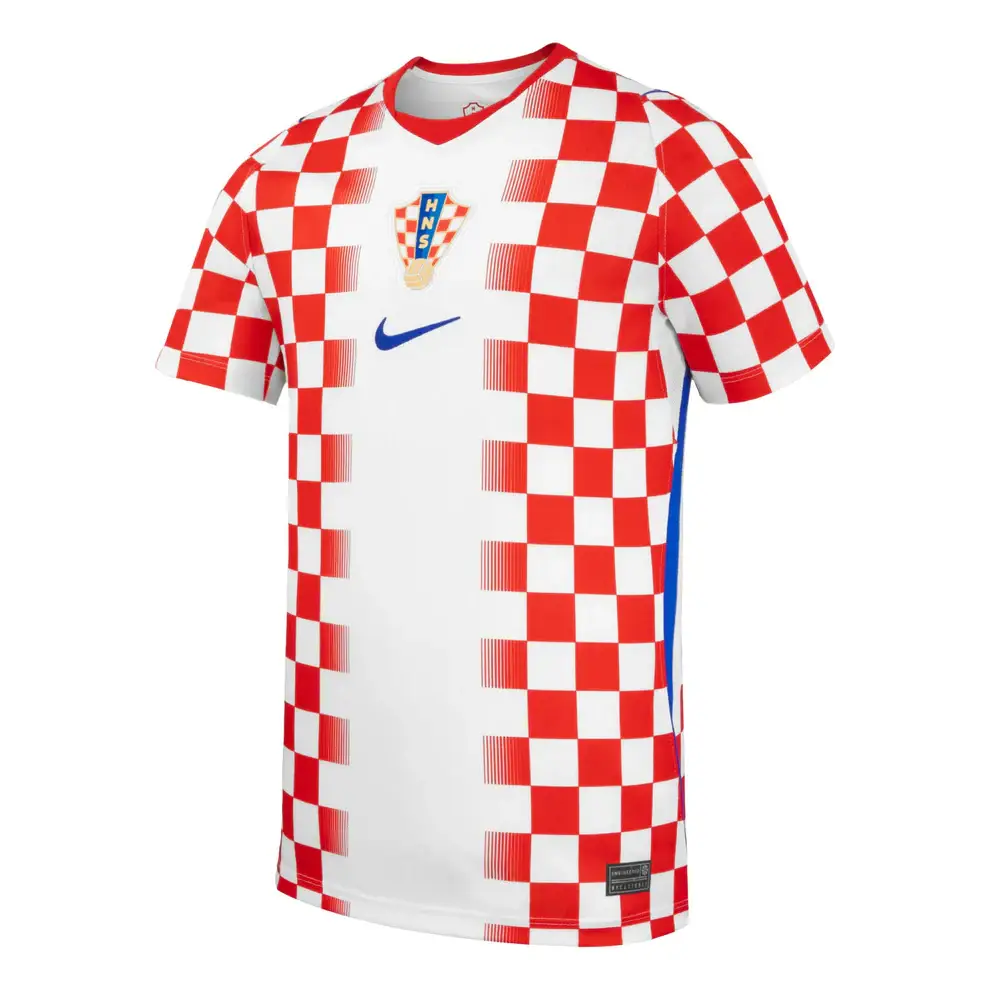
Some football shirts are simply kits. Others become a shorthand for a whole club, a whole part of London, and a whole way of playing the game. The white shirt of Tottenham Hotspur belongs firmly in that second group. When Spurs walk out in white, with navy shorts and white socks, supporters do not need a badge to know who they are watching. The shirt itself does the talking, and it has been doing so for well over a century. It is clean, bright, and instantly recognisable, and for generations of fans it has carried the hopes, the flair, and the romance that surround this north London club.
Tottenham Hotspur were founded in 1882, and the club took its name from Sir Henry Percy, known as Harry Hotspur, a figure from English history whose restless energy gave the club both its name and, in time, its fighting cockerel emblem. In those earliest days, the team did not wear the white that defines them today. Like many young clubs, Spurs tried different colours while they found their feet, and the shirt went through several early changes. What matters is the choice they eventually settled on, because once white arrived, it never really left. By the late 1890s, Tottenham had made the white shirt their own, and the nickname that followed them ever since, the Lilywhites, grew directly out of that simple, striking colour.
There is a reason white has lasted so long at Tottenham. On a crowded pitch, under floodlights or in bright afternoon sun, a white shirt stands out. It looks sharp against the green of the grass and against the darker colours worn by so many opponents. It also carries a certain feeling that supporters still talk about today. White suggests confidence and style, and Spurs have always wanted to be known as a team that plays with style. The club motto, To Dare Is To Do, fits the shirt perfectly. A plain white shirt leaves nowhere to hide. It asks the player wearing it to be brave on the ball, to try the pass, to take the shot, and to play the game in a way that is worth watching.
That link between the shirt and the football has been built over decades of memorable teams. In the early 1960s, Tottenham became the first club of the twentieth century to win the English league and the FA Cup in the same season, a double that still sits at the heart of the club’s story. A few years later, Spurs became the first British club to lift a European trophy. Those teams played in white, and the photographs and memories from those years fixed the shirt in the minds of supporters as a symbol of success and ambition. Later generations added their own chapters, winning the UEFA Cup and the FA Cup again in different eras, and each time the white shirt was the constant thread running through the story.
How the design has changed without losing itself
Look closely at Spurs shirts across the decades and you will see a design that changes in small ways while keeping its soul intact. The classic combination has almost always been a white shirt, navy shorts, and white socks, and that simple outline is what supporters picture first. Around that outline, designers have played with collars, cuffs, and trims. Some seasons brought a simple crew neck, others a polo collar or a neat v-neck. Navy trim has appeared on sleeves and collars, sometimes bold and sometimes barely there. In some years the shirt has been pure, unbroken white, and in others a fine pattern or a subtle texture has run through the fabric. None of those changes has ever taken the shirt away from its identity, because the identity was never about a collar or a cuff. It was about the colour itself, and about what the colour means to the people who wear it.
The cockerel has been another constant companion to the white shirt. The proud bird standing on a ball has sat on the chest for generations, and it gives the plain white shirt its character. Together, the white and the cockerel say everything about Tottenham: a club that wants to play on the front foot, that takes pride in its home in north London, and that believes football should be entertaining. When supporters see that combination, they think of White Hart Lane, the club’s famous old home, and of the new Tottenham Hotspur Stadium that now carries the same traditions forward into a new era. The ground changed, the shirt did not.
Wearing the Lilywhite shirt
For fans, the white shirt is not only something players wear on a Saturday. It is something supporters wear to the ground, to the pub, to five-a-side, and on holiday, and it works in all of those places because white goes with almost anything. A Spurs shirt looks as good with jeans as it does with shorts, and it is easy to spot in a crowd, which is exactly the point. On a matchday in north London, whole streets turn white as supporters make their way to the stadium, and that sea of white is part of the occasion before a ball is even kicked. It is a shared uniform, a way of saying that you belong to this club and this community, wherever you are from.
That feeling travels well beyond London. Tottenham supporters live all over the world, and the white shirt is how they find each other. Wear it in another country and a fellow fan will often stop you for a chat, and that conversation can start with the shirt and end with favourite players, favourite goals, and favourite memories of watching Spurs. It is also a shirt that passes down through families. Parents hand their old shirts to children, and children grow into new ones, and the white stays the same even as the names and numbers on the back change. That is why so many supporters keep their Spurs shirts for years, long after the season they were made for has ended.
If you love this shirt and want one of your own, take a look at the Tottenham Hotspur Home Jersey 2025/26 here at ElevenKick, and browse the wider Premier League collection for more fan-inspired shirts from England’s top flight. A white Spurs shirt never really goes out of style, and it is one of the easiest shirts in football to wear with pride.
In the end, the story of Tottenham’s lilywhite shirt is the story of a club that found its colour early and had the good sense never to give it up. White has carried Spurs through great teams and difficult seasons, through old grounds and new ones, and through generations of supporters who all recognise it at a glance. It is simple, it is bold, and it is unmistakably Tottenham. As long as Spurs walk out in white, the Lilywhites will be easy to spot, easy to love, and impossible to mistake for anyone else.