There are players who dominate a game with power, and players who dominate it with their brain. Luka Modric belongs to the second group. For nearly two decades, the Croatian midfielder has controlled matches from the No. 10 shirt — first for Dinamo Zagreb and Tottenham, then for Real Madrid, and always for Croatia. In 2018 he won the Ballon d’Or, ending a ten-year run of wins by Lionel Messi and Cristiano Ronaldo. This is the story of Modric and the shirts he has worn.
Modric was born in Zadar, on the Croatian coast, in 1985. He came through the youth system at Dinamo Zagreb, Croatia’s biggest club, and made his name there as a small, slight midfielder with extraordinary vision. He was not fast in the obvious way, and he was not physical. What he had was balance, close control, and a passing range that let him dictate the tempo of a game. Scouts across Europe noticed, and in 2008 he joined Tottenham Hotspur in the Premier League.
At Tottenham, Modric wore the white shirt and quickly became the team’s most important player. He played deeper than a traditional No. 10, collecting the ball from his defenders and starting attacks, and his performances against the biggest clubs in England and Europe made his reputation. Tottenham reached the Champions League quarter-finals in 2011 with Modric pulling the strings, and by the summer of 2012 the biggest club in the world had come calling.
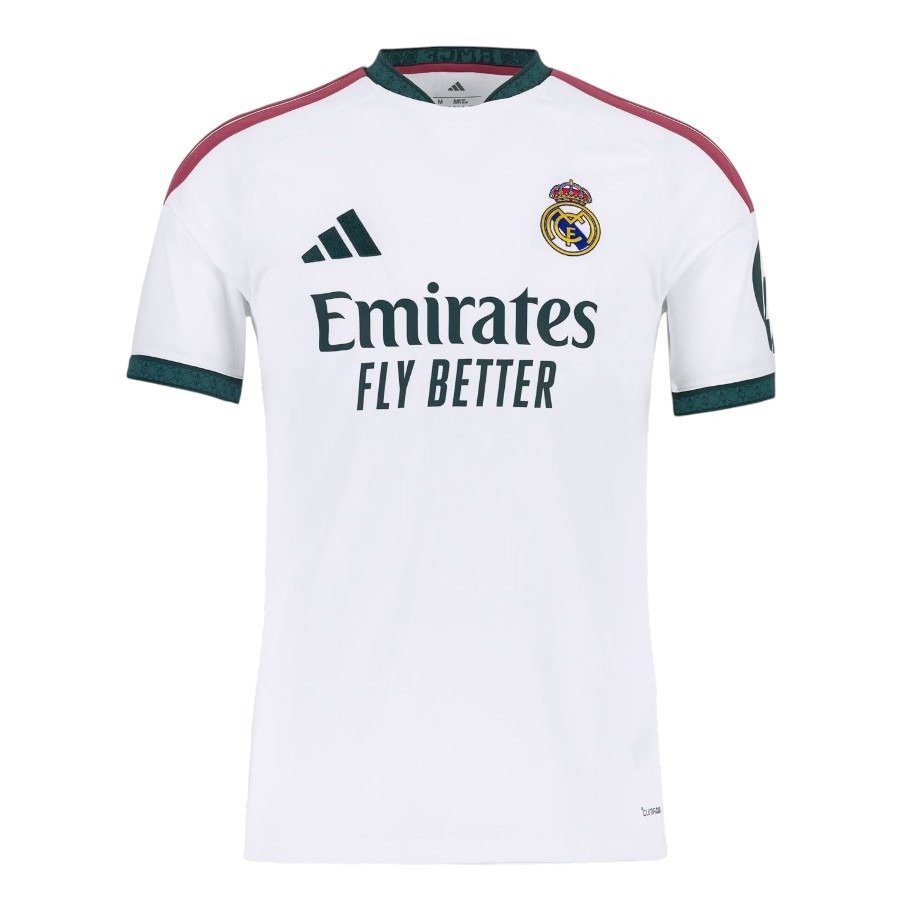
The white shirt of Real Madrid
Modric joined Real Madrid in 2012 and took the No. 10 shirt. What followed was one of the great club careers of the modern era. He won six European Cups with Real Madrid — in 2014, 2016, 2017, 2018, 2022 and 2024 — and four Spanish league titles. Alongside Toni Kroos and Casemiro, he formed a midfield that dominated European football for the best part of a decade. Kroos was the metronome, Casemiro the shield, and Modric the one who made things happen: the dribble out of trouble, the pass nobody else saw, the shot from distance.
The white Real Madrid shirt suited him. It is a shirt that carries the weight of the club’s history, and Modric wore it the way the greats do — as if it belonged to him. He played more than 500 games for the club, and his longevity became part of the story: still starting Champions League finals in his late thirties, still running games against players ten years younger. In 2025, after thirteen seasons in Madrid, he moved on to AC Milan, beginning a new chapter in the red and black shirt of one of Italy’s great clubs.
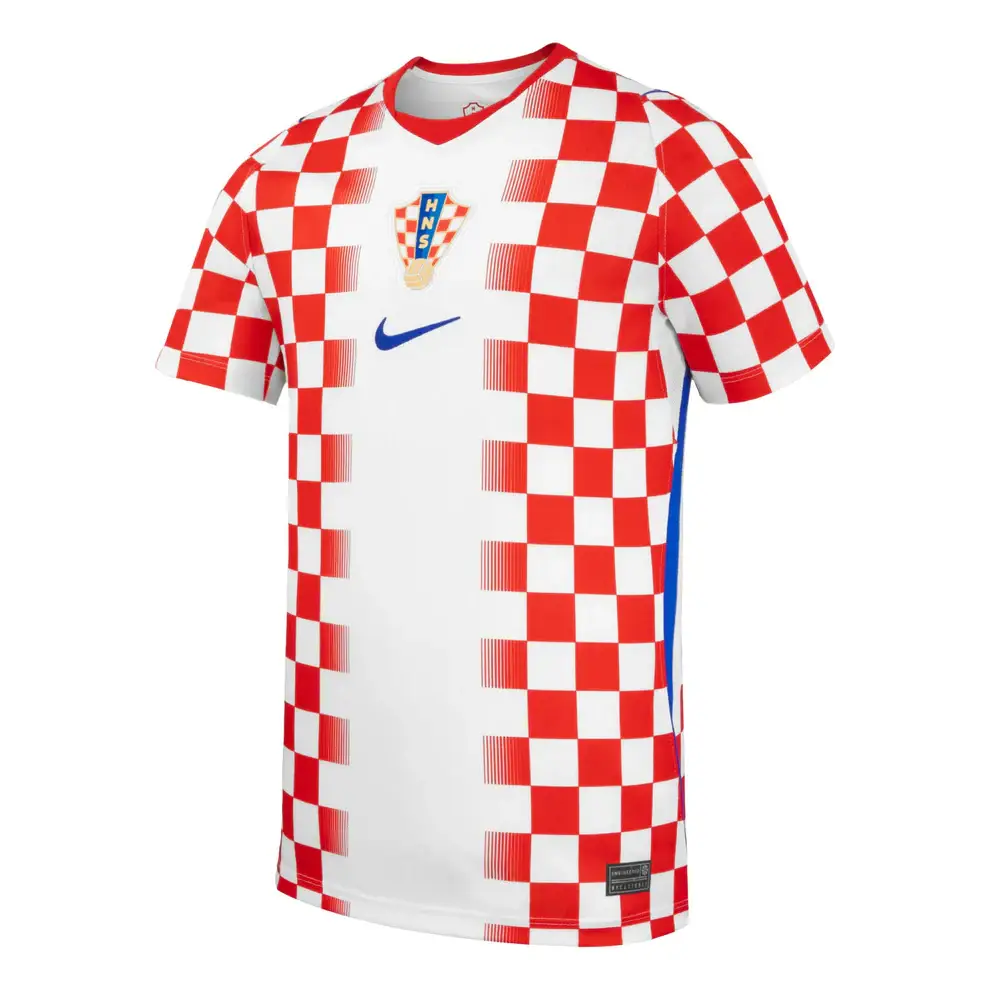
The checkered shirt of Croatia
If the white shirt made Modric a club legend, the red-and-white checkered shirt made him a national hero. Croatia’s shirt is one of the most distinctive in world football: the red and white checks of the Croatian coat of arms, worn across the chest. Modric has worn it with the No. 10 on his back since his international debut in 2006, and he has carried the team further than anyone thought possible.
The peak came at the 2018 World Cup in Russia. Croatia, a country of fewer than four million people, reached the final, beating Argentina, Russia and England along the way. Modric was the tournament’s best player and won the Golden Ball. In the final, Croatia lost 4-2 to France, but the run had made Modric a global star — and a few months later he won the Ballon d’Or, the award for the world’s best player. It was the first time in a decade that the award had gone to someone other than Messi or Ronaldo, and it felt like recognition for a different kind of greatness: not the goalscorer, but the player who makes the team work.
Four years later, at the 2022 World Cup in Qatar, Modric led Croatia to third place, beating Morocco in the third-place play-off. He has now played at four World Cups, and he remains the captain and the heartbeat of the national team. For Croatian supporters, the checkered No. 10 shirt is Modric’s shirt, in the same way the No. 10 once belonged to the greats of other generations.
What makes a Modric shirt
Modric’s game is built on technique rather than power, and that shows in the shirts collectors want. The Croatia home shirt, with its famous checks, is the essential one: it is the shirt of the 2018 World Cup run, the Golden Ball, and the Ballon d’Or. The Real Madrid home shirt, in all white with the No. 10, is the club equivalent — the shirt of six European Cups. The Tottenham shirt from his years in London is a favourite for Premier League collectors, and the AC Milan shirt is the newest chapter.
If you are choosing a Modric shirt, the usual advice applies: check the size guide, because modern shirts fit close to the body. The Croatia home shirt is the classic choice for most fans, and the checks make it one of the most recognisable national team shirts in the world. It is a shirt that stands out in any collection, and it tells a story that starts in Zadar and runs through London, Madrid, and two World Cup medals.
Luka Modric’s career is a reminder that football is not only about goals. It is about the player who sees the pass before anyone else, who keeps the ball when the pressure is on, and who makes everyone around him better. The No. 10 shirts he has worn — the checks of Croatia, the white of Real Madrid — are the shirts of a midfielder who became one of the greats.
Read the story of the shirt itself in our Croatia jersey guide (https://elevenkick.com/croatia-soccer-jersey-the-story-of-the-famous-checkered-shirt/), explore the Real Madrid collection (https://elevenkick.com/product-category/la-liga/real-madrid/) including the Real Madrid home shirt (https://elevenkick.com/product/real-madrid-soccer-jersey-home-custom-shirt-2025-26/), and see his new club in our AC Milan jersey story (https://elevenkick.com/ac-milan-soccer-jersey-the-story-of-the-rossoneri-shirt/). Browse the full range at the ElevenKick shop (https://elevenkick.com/shop/).