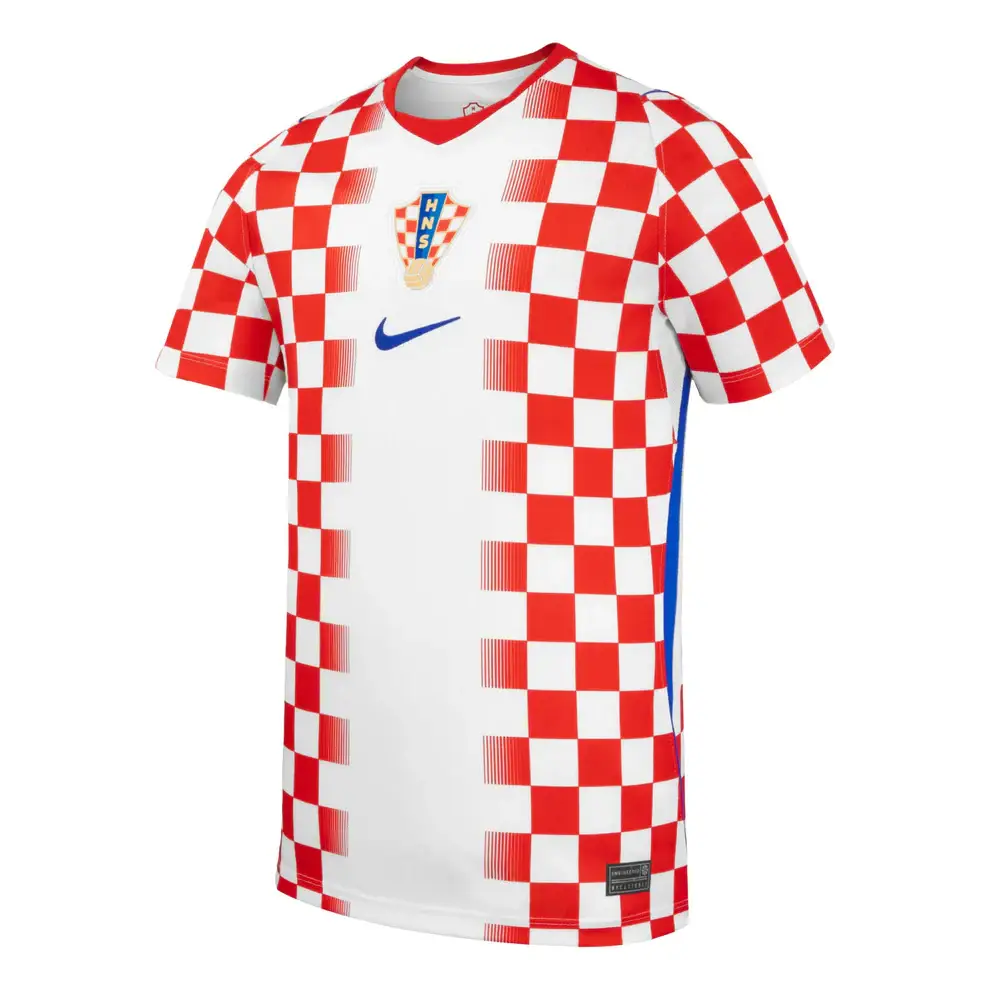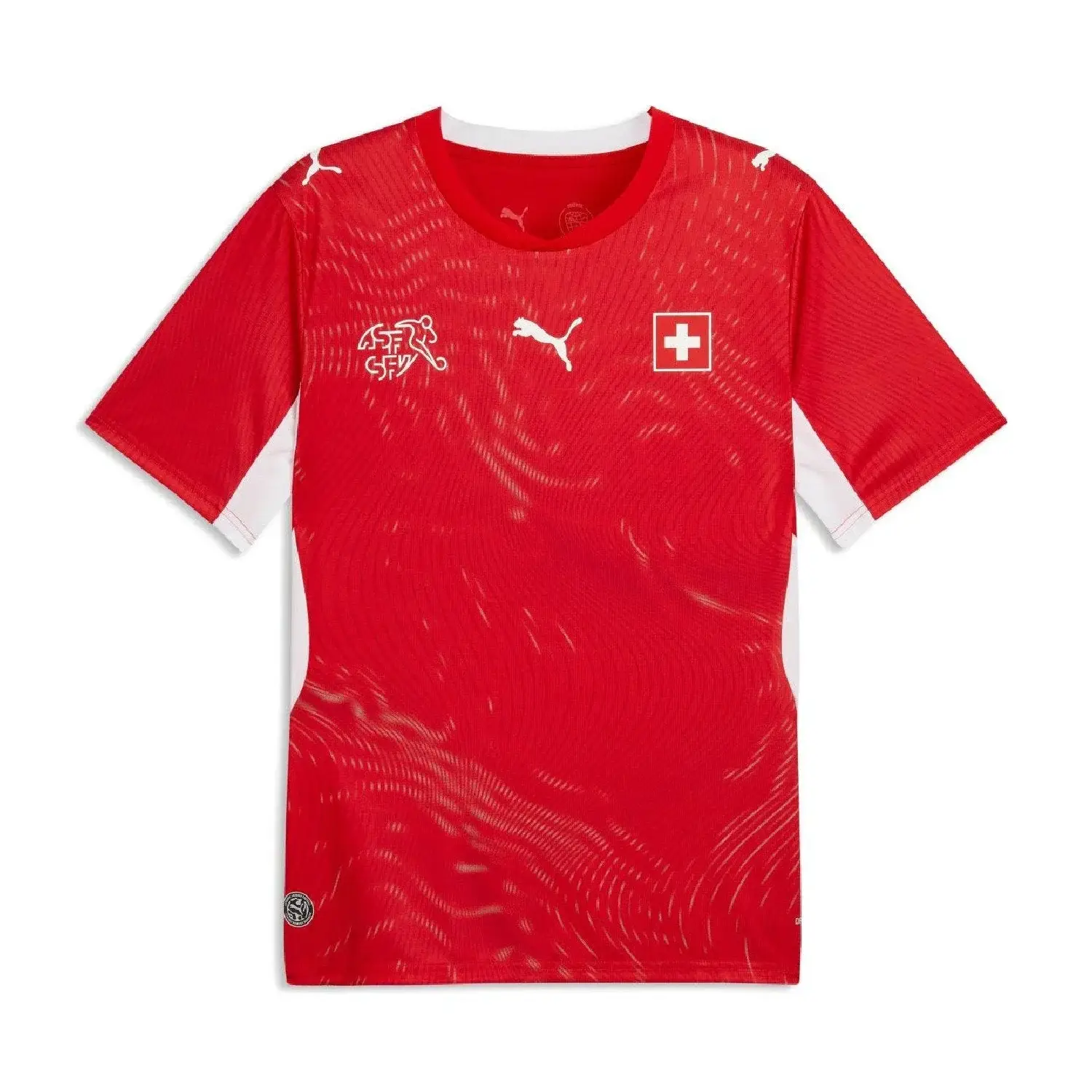
Switzerland’s national team shirt is one of the cleanest designs in international football: a deep red body with a bold white cross on the chest. It is simple, instantly recognisable, and — unlike most national shirts — it carries a national symbol that has nothing to do with football and everything to do with the country itself. The Swiss cross is one of the most famous emblems in the world, and on a football shirt it looks superb. Here is the story of the Switzerland jersey, from its early days to the modern team’s tournament runs and the 2026 World Cup.
A red shirt with a white cross
Switzerland’s football association was founded in 1895, making it one of the oldest in the world, and the national team has worn red for most of its history. The design is beautifully straightforward: a red shirt, white shorts, red socks, with the white Swiss cross standing out on the chest. There are no stripes, no patterns, no clutter — just the flag’s colours, worn with pride.
That simplicity is the shirt’s greatest strength. While other national teams have experimented with sash designs, gradient fades and bold graphics, Switzerland has mostly trusted the cross to do the work. The result is a shirt that looks as good today as it did decades ago, and one that collectors value precisely because it never goes out of style.
1954: the home World Cup
Switzerland’s greatest moment as a host came in 1954, when the country staged the World Cup. The tournament is remembered for the famous quarter-final between Hungary and Brazil — the so-called “Battle of Berne” — and for West Germany’s surprise victory over Hungary in the final, the “Miracle of Berne”. Switzerland’s own team reached the quarter-finals on home soil, losing 7-5 to Austria in a match that remains the highest-scoring game in World Cup history. The red shirts of that Swiss team are part of World Cup folklore, and the tournament put Swiss football on the map.
For the decades that followed, Switzerland were regulars at major tournaments without ever quite breaking through. They qualified for World Cups in the 1960s and again in the 1990s, and their steady, organised style of play became a trademark. The shirt stayed red throughout — a constant through the changing eras of the game.
The modern era: 2006 to 2024
The modern Switzerland team has become one of Europe’s most reliable tournament sides. At the 2006 World Cup in Germany, Switzerland reached the round of 16 and were knocked out by Ukraine on penalties — remarkably, without conceding a single goal in the entire tournament. It was a defensive record that perfectly matched the team’s reputation: organised, disciplined and very hard to beat.
The team kept coming back. Switzerland reached the round of 16 at the 2018 World Cup in Russia and again at the 2022 World Cup in Qatar, and they have become regulars at the European Championship too. At Euro 2020, they produced one of the great tournament upsets, knocking out world champions France on penalties in the round of 16 before losing a shootout to Spain in the quarter-finals. At Euro 2024 in Germany, they reached the quarter-finals again, beating defending champions Italy along the way before losing on penalties to England. Two quarter-finals in a row at the Euros confirmed what Swiss fans already knew: this is a team that belongs at the top table.
Players like Granit Xhaka, Xherdan Shaqiri and Yann Sommer have become household names across Europe, and the red shirt they wear has become a familiar sight at every major tournament. Shaqiri, in particular, has built a reputation as a tournament player, scoring spectacular goals at World Cups and European Championships alike.
What to look for in a Switzerland shirt
The current Switzerland home shirt keeps the formula that has always worked: a rich red body, a white cross on the chest, and clean white trim. It is a shirt that works brilliantly as a supporter’s shirt and as a collector’s piece, because the design is so timeless. The red is bold enough to stand out in a crowd, and the cross gives it an identity no other national team can copy. You can see the current design on the Switzerland 2026 World Cup Jersey.
When you choose a Switzerland shirt, check the size guide first — international shirts tend to fit true to size, and a good fit makes all the difference on matchday. The shirt pairs well with jeans or shorts, and the red-and-white combination is easy to wear beyond the stadium too. It is one of those national team shirts that looks just as good on the street as it does in the stands.
Switzerland and the 2026 World Cup
Switzerland head into the 2026 World Cup in the United States, Canada and Mexico as one of Europe’s most dependable tournament teams. With an expanded 48-team tournament and more matches than ever before, the Swiss will fancy their chances of another deep run — and their fans will be there in numbers, wearing the red shirt with the white cross. The 2026 design is a fresh take on a classic: the same red, the same cross, updated for a new generation of supporters.
Whether you are Swiss, you admire the team’s fighting spirit, or you simply love a beautifully simple football shirt, the Switzerland jersey is a fine addition to any collection. It carries more than a century of football history, a World Cup hosted on home soil, and a modern team that keeps proving the doubters wrong. You can find the current Switzerland shirt and the rest of our national team collection at the ElevenKick shop.