Some footballers are remembered for trophies, and some for goals. Ronaldinho is remembered for joy. The Brazilian playmaker, famous for his smile, his tricks and his No. 10 shirt, made football look like fun at the highest level, and his shirts — yellow for Brazil, blue and red for Barcelona — remain among the most collected in the game.
From Porto Alegre to the world
Ronaldo de Assis Moreira, known as Ronaldinho, was born in Porto Alegre, Brazil, in 1980 and began his professional career with Gremio. He moved to Paris Saint-Germain in 2001, where European audiences first saw his close control, his flicks and his free kicks. It was clear early on that he was not a conventional star: he played with a freedom that coaches usually try to coach out of young players, and it worked because his technique was so good that defenders could not stop him even when they knew what was coming.
The Brazil No. 10: World Cup winner in 2002
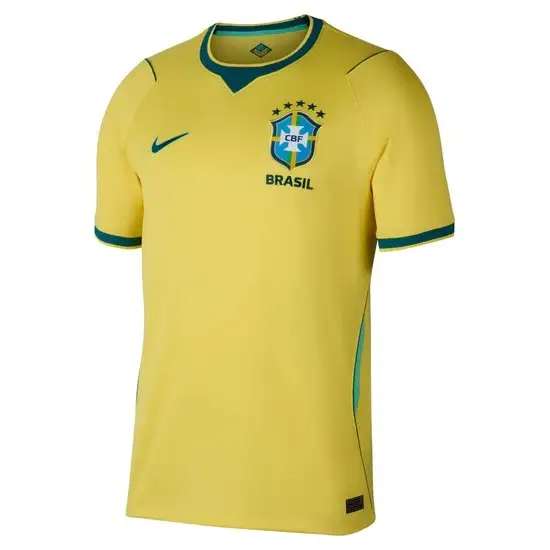
Ronaldinho’s Brazil story reached its peak at the 2002 World Cup in South Korea and Japan, where Brazil won the tournament. Wearing the famous yellow shirt, Ronaldinho scored a memorable free kick against England in the quarter-final, a goal still talked about today for its audacity and distance. That tournament made him a global name, and the yellow Brazil No. 10 became a shirt that fans associate with flair, confidence and a Brazil team that played with attacking freedom. Brazil’s yellow shirt has always been iconic, but Ronaldinho gave it a new, joyful chapter.
Barcelona: the No. 10 that changed a club
In 2003 Ronaldinho joined Barcelona, and his time there changed the club’s modern history. He won the Ballon d’Or in 2005 as the world’s best player, helped Barcelona win La Liga titles, and led the team to Champions League glory in 2006, beating Arsenal in the final in Paris. His Barcelona shirt — blue and red stripes with the No. 10 on the back — became a symbol of that revival. Young fans who started watching football in the mid-2000s often name Ronaldinho as the first player they loved, and many of them remember his Barcelona shirt before any other.
Tricks, free kicks and the joy of watching him
What made Ronaldinho different was not just what he won, but how he played. He used no-look passes, elasticos, stepovers and backheels not as party tricks, but as normal parts of his game. He smiled while doing it, and that smile mattered: it told young players that football could be creative and expressive, not just tactical and serious. His free kicks, his assists and his goals are still shared widely today, and they explain why his shirts continue to sell long after his retirement. People do not just collect a Ronaldinho shirt; they collect a feeling.
AC Milan and the later years
After Barcelona, Ronaldinho played for AC Milan from 2008, wearing the club’s red and black stripes, and later returned to Brazil with Flamengo and Atletico Mineiro, winning the Copa Libertadores with Atletico Mineiro in 2013. Those later shirts are less famous than the Brazil and Barcelona versions, but they complete the story: a player who carried his style wherever he went, and who remained a crowd favourite even as his pace faded. Collectors often start with Brazil or Barcelona, then add Milan or Atletico Mineiro to complete the set.
Why Ronaldinho shirts are still collected
Ronaldinho shirts endure for three reasons. First, the designs themselves are strong: Brazil yellow and Barcelona blue and red are two of football’s most recognisable palettes. Second, the player is universally liked, which means his shirts work as gifts and as display pieces, not just as fan items. Third, his peak years came at a time when many of today’s adult fans were first falling in love with football, so the shirts carry personal memories as well as history. A Ronaldinho shirt on a wall is a reminder of a time when football felt playful.
Choosing a fan-inspired Ronaldinho-era shirt
If you want a fan-inspired shirt from Ronaldinho’s era, start with the team you associate with him most: Brazil yellow for the World Cup winner, or Barcelona stripes for the Ballon d’Or years. Check that the colours are bright and even, that the number and name area look clean, and that the fit suits how you will wear it — normal size for playing, one size up for a casual fit. A fan-inspired version is made for support, everyday wear and collecting, and it should be comfortable enough to wear to a match, a watch party or a day out.
Ronaldinho did not just win trophies; he reminded football why people love it in the first place. To celebrate that joy, explore Brazil and Barcelona fan-inspired shirts in the ElevenKick shop.