There is one shirt in football history that needs no introduction: the yellow Brazil shirt with the number 10 on the back, worn by Pelé. When people picture the greatest player of all time, they usually picture him in that shirt, smiling, arms raised, or striking a ball with a grace that made the impossible look easy. The Pelé soccer jersey is more than a collector’s item. It is a symbol of joy, skill, and the beautiful game itself.
This guide looks at the No. 10 shirts Pelé made famous, the clubs and country he represented, and why a Brazil shirt with that famous number still means so much to fans today.
Who was Pelé?
Pelé, born Edson Arantes do Nascimento in Brazil in 1940, is widely regarded as the greatest footballer of all time and is often called the King of Football. He rose from humble beginnings to become a global star while still a teenager, and his career changed how the world saw both Brazil and football itself.
He is the only player to have won three World Cups, lifting the trophy with Brazil in 1958, 1962, and 1970. That record alone puts him in a category of his own. But it was the way he played that made him beloved: quick feet, brilliant vision, powerful shooting, and a joyful style that made fans feel lucky just to watch him.
At club level, Pelé spent most of his career with Santos in Brazil, where he became a legend, and later played for the New York Cosmos in the United States, helping to grow football in a new country. Wherever he went, the shirt he wore became part of the story.
The yellow Brazil shirt and the number 10
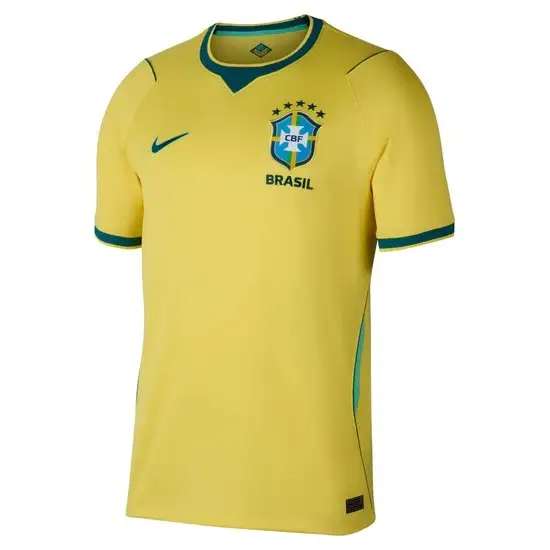
Brazil’s home shirt is famous around the world: bright yellow, with green trim and blue shorts, a combination that reflects the colors of the Brazilian flag. It is one of the most recognizable national team shirts ever made, and much of that fame comes from Pelé.
The number 10 has a special meaning in football. Traditionally worn by the team’s playmaker, the creative heart of the side, it became linked with Pelé more than with anyone else. When fans see a yellow Brazil shirt with 10 on the back, they think of Pelé first, even decades after his last World Cup.
That is why the Pelé jersey is so often shown as a Brazil shirt rather than a club shirt. The yellow shirt is the image the whole world knows: Pelé in 1958 as a teenager announcing himself on the biggest stage, Pelé in 1970 leading one of the greatest teams ever seen, and Pelé celebrating goals that still appear in highlight reels today.
Three World Cups, one unforgettable shirt
In 1958, Pelé was just 17 when he helped Brazil win the World Cup in Sweden. His performances announced a new kind of footballer to the world: young, fearless, and dazzlingly skillful. The yellow shirt from that tournament became a symbol of a new era for Brazil.
By 1962, Brazil won the World Cup again, adding another chapter to the story of the yellow shirt. And in 1970, in Mexico, Pelé led a Brazil team that many fans still call the greatest international side of all time to a third triumph. That 1970 shirt, yellow with green trim and the number 10, is perhaps the single most famous football shirt in history.
For collectors, each of those eras has its own look. Early shirts were simple and heavy, with a plain crest and little decoration. Later shirts became lighter and more refined, but the core identity never changed: yellow, green trim, and the feeling that this shirt belonged to the most joyful team in football.
Santos and the New York Cosmos
While the Brazil shirt is the most famous Pelé shirt, his club shirts tell another part of the story. At Santos, Pelé wore the club’s white shirt with black trim, becoming the greatest player in the club’s history and a hero to generations of Santos supporters. A Santos shirt from the Pelé era represents the club game at its most romantic, when a single player could make a whole team world-famous.
Later, with the New York Cosmos, Pelé wore a white shirt with green and yellow details, bringing his star power to American soccer. That chapter matters because it showed how far his fame had traveled. Fans in a country still learning to love football could now watch the King himself, in person, wearing a Cosmos shirt.
For a fan building a Pelé collection, the Brazil shirt is the natural starting point, but Santos and Cosmos shirts add depth. Together, they show a career that spanned continents and changed football wherever it went.
Why the Pelé jersey still matters
Part of the appeal is history. Wearing a Pelé-inspired Brazil shirt connects you to the three World Cup wins, to the idea of football as joy, and to a player whose name is known even by people who never watched a full match. It is a conversation starter and a piece of football heritage at the same time.
Another part is style. The yellow Brazil shirt is bright, confident, and easy to wear. It works at a match, at a summer gathering, or as the centerpiece of a collection displayed on a wall. Few shirts in any sport are as instantly recognizable or as warmly received.
Finally, there is the number. The No. 10 on a Brazil shirt is a tribute in itself. It says that you know your football history, and that you appreciate the player who made that number famous for the whole world.
Choosing a Pelé-inspired Brazil jersey
If you want to honor Pelé, start with a yellow Brazil shirt. Look for the classic combination of yellow with green trim and a crest over the heart. Whether you choose a modern fan-inspired version or a retro-style shirt inspired by the 1970 era, the yellow shirt is the one that tells the Pelé story most clearly.
Think about fit and comfort, just as with any football shirt. Modern fan-inspired shirts are usually made for relaxed everyday wear, while closer athletic cuts suit sport and training. Check the size guide, and choose the fit you will actually enjoy wearing, rather than the one you think you should choose.
Pay attention to the details: the shade of yellow, the green trim, the crest, and the number on the back if you choose a No. 10 shirt. A well-made, premium-quality replica-fit shirt will keep its color and shape with regular wear, so it stays a shirt you are proud to put on.
Care for it gently, washing inside out on a gentle cycle and air drying when you can. Yellow shirts show their age if they are washed too hot or dried too harshly, so a little care goes a long way toward keeping that famous yellow bright.
The King and his shirt
Pelé’s story is the story of football itself: a boy from Brazil who became the King, who won three World Cups, who lit up Santos and the New York Cosmos, and who made the yellow Brazil shirt with the number 10 the most beloved shirt in the game. That shirt still brings a smile to fans’ faces, wherever in the world it is worn.
If you would like a Brazil shirt of your own, explore the Brazil 2026 World Cup jersey at ElevenKick or browse the wider ElevenKick shop for more national team shirts to add to your collection.