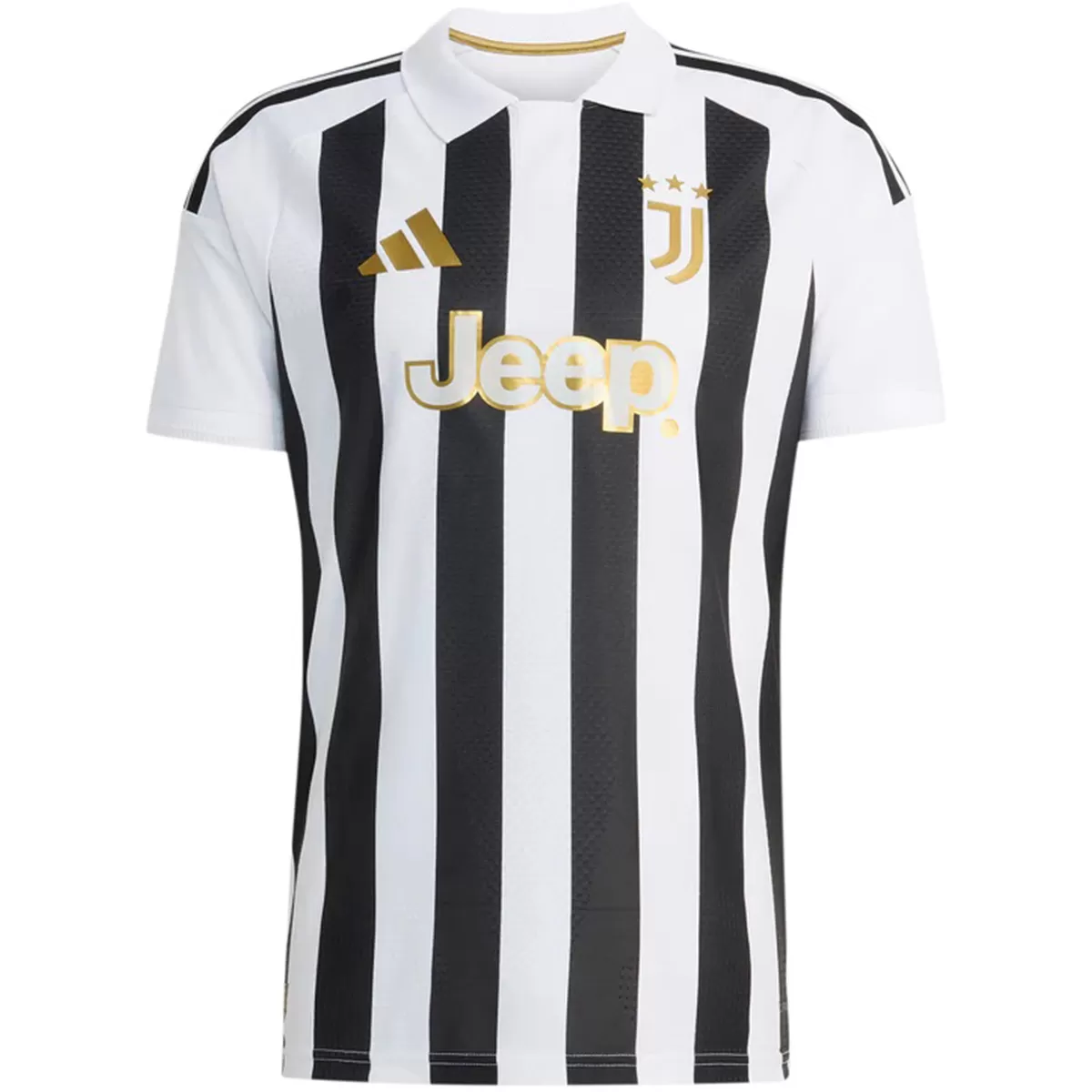
If one shirt sums up Italian football, it is the Juventus jersey. Black and white vertical stripes, worn in Turin for more than a century, have become a symbol of winning, discipline and style. This guide explains where the stripes came from, how the shirt has changed, and why collectors still want it today.
From pink shirts to black and white
Juventus was founded in Turin in 1897 by a group of young students. The club’s first shirts were pink, with black shorts. That early look did not last. In 1903 the club adopted black and white vertical stripes, an idea linked to the English club Notts County, whose striped shirts were supplied to Juventus. The change stuck, and the stripes have defined the club ever since. Fans call the club the Old Lady, and the striped shirt is instantly recognisable in any stadium in the world.
What the stripes mean to fans
The Juventus shirt is deliberately simple. There are no wild patterns and no bright colours, just bold vertical stripes on a clean base. That simplicity is the point. Juventus built its identity around control, organisation and consistency, and the shirt reflects that character. Over the years the width of the stripes has changed, the collar has changed, and sponsors and crests have come and gone, but the black and white core has never been abandoned. When fans see the stripes, they think of Turin, of Serie A, and of a club that expects to compete for titles every season.
The great eras in the striped shirt
The stripes have been worn by some of football’s greatest players. In the 1980s Michel Platini led Juventus in the famous striped shirt during one of the club’s most successful periods in Europe. Later, Alessandro Del Piero became the face of the club, wearing the number 10 shirt for nearly two decades and becoming its all-time leading scorer. Gianluigi Buffon, one of the greatest goalkeepers in history, guarded the goal behind the stripes for most of his career. Other stars, including Zinedine Zidane, Pavel Nedved and Roberto Baggio, also wore the black and white shirt at different stages of their careers. Each generation added its own chapter, but the shirt stayed the same.
Home, away and third kits
The home shirt is always the striped one. Away shirts give designers more freedom, and Juventus away kits over the years have used colours such as yellow, blue, pink and black, often as a nod to the club’s original pink shirts. Third kits tend to be bolder still, made for fans who want something different from the classic home look. For collectors, the home shirt is the essential piece, while away and third shirts show how the club’s style has evolved. A Juventus collection usually starts with the stripes and grows from there.
The modern Juventus shirt
Since moving to the Allianz Stadium in 2011, Juventus has kept the striped identity while updating the details. Modern shirts are lighter and more fitted than the heavy cotton shirts of the past, and they are made for both playing and everyday wear. The club crest has been simplified in recent years, but the stripes remain the star. Whether you wear it to a match, to training or on a normal day out, the Juventus home shirt works because it is bold without being loud. It pairs easily with jeans, shorts or track pants, and it never looks out of place.
Why collectors love the Juventus jersey
Collectors love Juventus shirts for three reasons. First, the design is timeless, so an old striped shirt still looks good today. Second, the club’s history is so rich that every era has a story attached to it. Third, the shirt is easy to recognise, which makes it a strong centrepiece in any collection. If you are starting a collection, a black and white Juventus shirt is one of the safest and most satisfying first buys. If you already collect, it is the shirt that ties a Serie A section together.
Juventus shirts through the decades
The Juventus shirt has changed in small ways in every decade, and those changes are part of what makes collecting it so rewarding. In the 1960s and 1970s, shirts were made from heavier cotton, with simple collars and a straightforward fit that reflected the football of the time. By the 1980s and 1990s, lighter synthetic fabrics arrived, collars became more varied, and the shirt began to look closer to the modern version fans know today. The 2000s brought slimmer cuts and bolder details around the collar and sleeves, while recent shirts have returned to a cleaner, more refined version of the classic stripes. For collectors, these decade-by-decade differences matter. An older shirt tells you about the era it came from, from the fabric to the shape of the crest, while a modern shirt shows how the club has refined its identity without ever abandoning it. When choosing a Juventus shirt, look at the stripe width, the collar style and the overall fit, and pick the era that speaks to you. Some fans prefer the roomier vintage feel, while others prefer the sharper modern cut. Either way, the black and white stripes guarantee that the shirt will always be recognisable, and that is why Juventus shirts hold their place in collections year after year, no matter which decade they come from.
Browse the Juventus collection at ElevenKick and find the striped shirt that fits your collection.