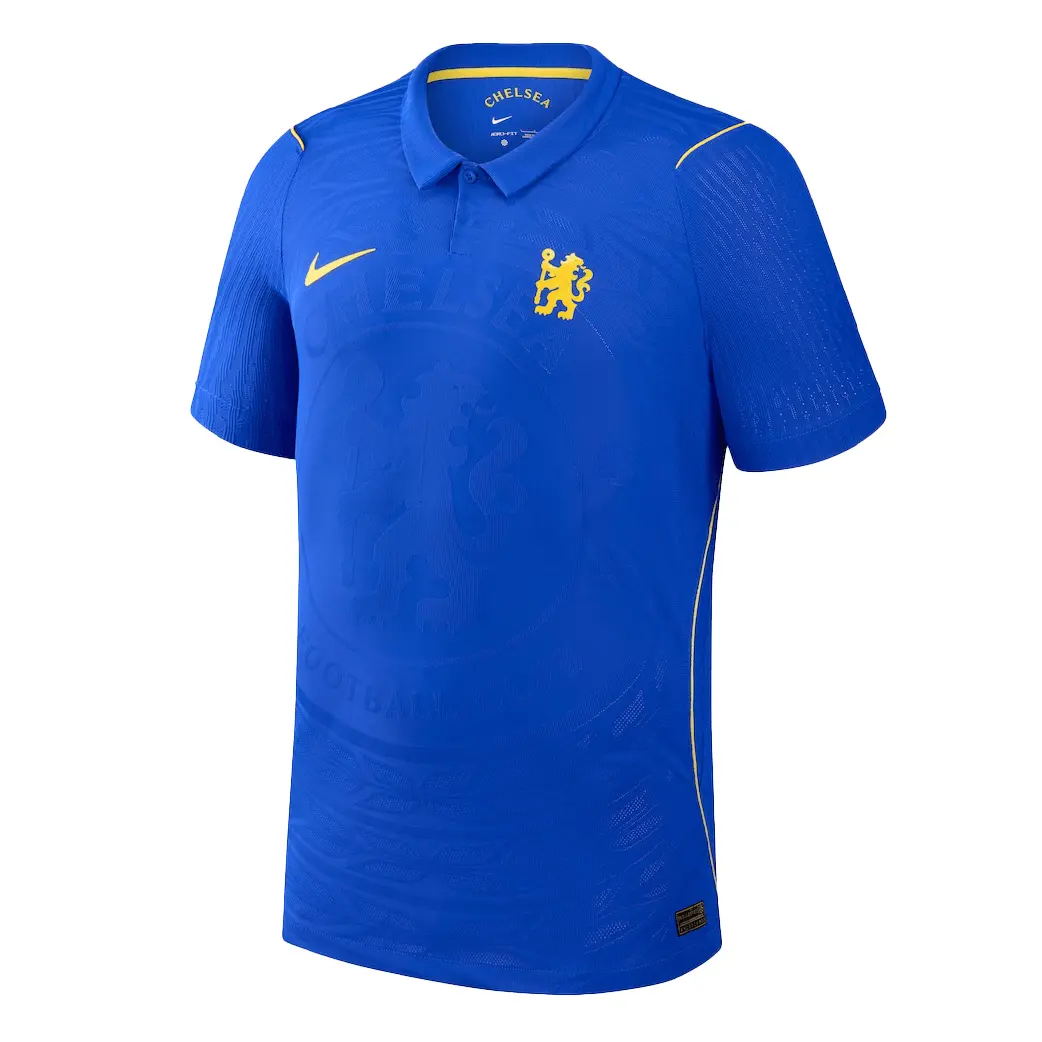
Some shirts are defined by a colour, and Chelsea’s is defined by one shade above all: royal blue. Since the club was founded in 1905, Chelsea have worn blue at Stamford Bridge, and the shirt has become a symbol of west London football. Through long waits for success, a transformation in the modern era, and two European Cup triumphs, the blue shirt has stayed constant. This guide traces its story, from the early days to the modern classics, and what to look for when you choose one.
Founded in blue: 1905 and Stamford Bridge
Chelsea Football Club was founded in 1905, formed to fill the new Stamford Bridge stadium in Fulham, west London. From the start, the club wore blue shirts with white shorts, a combination that has barely changed in over a century. The early shirts were simple, with no sponsor and a plain crest, and they reflected the football of the era: heavy cotton, long sleeves, and a fit made for muddy pitches rather than fashion. Chelsea’s first major trophy, the league title in 1955 under manager Ted Drake, was won in blue, and the shirt from that era is remembered as the first great Chelsea design. Drake also modernised the club’s image, moving away from the old pensioner crest toward a more modern lion badge, a symbol that would evolve into the lion rampant still seen on Chelsea shirts today.
The 1960s and 1970s: style arrives
In the 1960s, Chelsea became known as a stylish club, on and off the pitch. Under manager Tommy Docherty, the team wore blue shirts with white socks and became associated with the fashionable King’s Road scene nearby. The FA Cup win in 1970, after a famously brutal final and replay against Leeds United, and the European Cup Winners’ Cup win in 1971, gave the blue shirt its first European glory. The shirts of this era were simple and elegant, and they remain popular with collectors who value clean design over busy graphics. The 1970s also brought harder times, including relegation and financial difficulty, but the shirt stayed blue, and supporters kept wearing it through the lean years. That loyalty is part of why the blue shirt means so much to Chelsea fans: it was worn through thin as well as thick.
The modern transformation
Chelsea’s modern era began in the late 1990s and accelerated after 2003, when the club’s new ownership invested heavily in players and facilities. The blue shirt was suddenly worn by some of the world’s best players, and it began appearing in Champions League finals and title races every season. The Premier League titles of 2005 and 2006, under Jose Mourinho, were won in simple blue home shirts with white trim, designs that collectors now associate with the club’s rise to the top of English football. Later title wins in 2010, 2015, and 2017 each brought their own blue home shirt, and while the details changed — collars, shades of blue, sponsor logos — the core never did. A Chelsea home shirt is always recognisably Chelsea, and that consistency helps collectors: shirts from different eras sit together naturally, united by the same royal blue.
Munich 2012 and Porto 2021: the European nights
Two nights define the modern Chelsea shirt. The first was in Munich in 2012, when Chelsea beat Bayern Munich on penalties in the Champions League final, in Bayern’s own stadium, to win the European Cup for the first time. Didier Drogba scored the late equaliser and the winning penalty, wearing the blue shirt that has since become one of the club’s most sought-after designs. The second was in Porto in 2021, when Chelsea beat Manchester City 1-0 to win the Champions League again, with Kai Havertz scoring the only goal. The 2020-21 home shirt, with its blue base and subtle pattern, is now a modern classic, tied to a team built around a strong defence and a young, exciting squad. For collectors, these two shirts are the modern equivalents of the 1955 and 1970 classics: they mark the moments when Chelsea reached the top of Europe, and they are the shirts fans reach for when they want to tell the club’s story in a single image.
Away shirts and the lion badge
While the home shirt stays blue, Chelsea’s away shirts have carried the experiments: white, black, yellow, and more adventurous designs, including the famous yellow away shirts of past decades and modern third shirts in bright colours. The away shirt is often where collectors find their favourite, because it offers variety without leaving the club’s identity behind. The badge, meanwhile, has settled into its modern form: a lion rampant holding a staff, inside a circular crest, with the club name around it. The lion links back to the club’s history and to the borough’s coat of arms, and it sits over the heart on every Chelsea shirt. When you judge a Chelsea shirt, look at the shade of blue first, then the collar and the badge: those three details tell you almost everything about which season it comes from.
Choosing a Chelsea shirt
If this is your first Chelsea shirt, start with the home blue. It works with jeans, dark trousers, and shorts, and it is recognised instantly by football fans anywhere. Check the size guide against a shirt you already own, because modern fan shirts are cut for everyday wear and sizes vary between seasons. If you already own a home shirt, consider an away design for variety, or a shirt tied to a specific season you remember — Munich 2012 or Porto 2021 for European nights, or a title-winning season for domestic success. Look after it like any favourite shirt: wash cold and inside out, and air dry rather than tumble dry, so the badge and printing stay sharp for years.
Closing
Royal blue since 1905, through league titles, cup finals, and two European Cups — the Chelsea shirt has earned its place among football’s great designs by staying true to a simple idea. Whether you are buying your first blue shirt or adding a European-night classic to a collection, start with the home shirt and let the history speak for itself. Browse the ElevenKick shop to find Chelsea shirts and the rest of the club range for your collection.