Brazil’s 1994 World Cup jersey is one of the most famous shirts in football history. It is yellow with green trim, it carries the story of a fourth star, and it is linked forever to a summer in the United States when Brazil returned to the top of the world. For collectors, it is a retro classic. For fans, it is a reminder of Romario, Bebeto, and a team that won when it mattered most. This guide looks at the shirt, the tournament, and why 1994 still matters today.
The Yellow Shirt with Green Trim and the Fourth Star
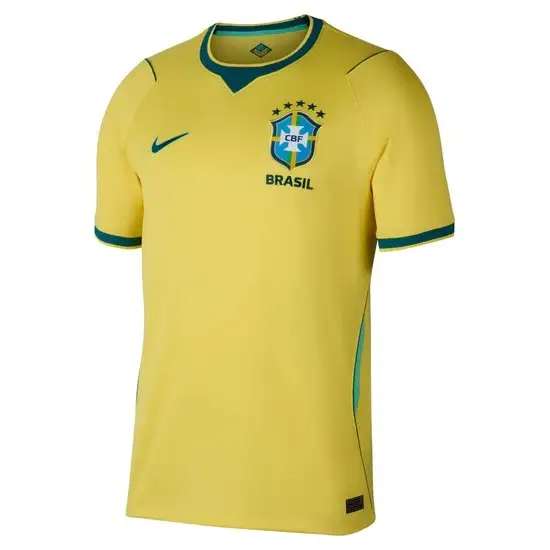
Brazil’s home shirt has always been yellow, but the 1994 version gave that yellow a special meaning. The shirt featured green trim, a simple and clean design, and, after the tournament, a fourth star above the badge to mark Brazil’s fourth World Cup title. That fourth star is the key detail for collectors. Before 1994, Brazil had three stars, from victories in 1958, 1962, and 1970. After 1994, they had four, and the shirt became a symbol of a wait finally coming to an end. The design itself was not complicated, and that is part of its appeal. Yellow, green, and a badge with stars is all Brazil need. The shirt does not try to be clever. It lets colour and history do the work, and it remains easy to recognise in any photograph from USA 94.
USA 1994 Context
The 1994 World Cup was held in the United States, a country where football was still growing as a spectator sport. Stadiums were large, crowds were enthusiastic, and the tournament brought the world’s game to a new audience. For Brazil, the context was pressure. The team had not won a World Cup since 1970, and expectations at home were enormous. Every match was followed closely in Brazil, and every result was analysed in detail. The team that travelled to the United States was not the most flamboyant Brazil side in history, but it was organised, disciplined, and determined. That combination proved to be exactly what was needed in a tournament where one mistake could end a campaign.
The Team: Romario, Bebeto, Dunga, Taffarel and Parreira
The 1994 team was built around a core of experienced and talented players. Romario was the star striker, a forward with extraordinary movement, finishing, and confidence in front of goal. Bebeto played alongside him, forming a partnership that gave Brazil goals and creativity. Behind them, captain Dunga provided leadership and defensive strength in midfield, setting the tone for a team that was hard to beat. In goal, Taffarel was calm and reliable, making important saves at key moments. The coach was Carlos Alberto Parreira, who organised the team, managed the pressure, and made decisions that helped Brazil progress through the tournament. Together, they formed a team that was less about individual flair and more about balance, teamwork, and winning when it counted.
The Final Against Italy: 0-0, Then Penalties 3-2
The final, played against Italy, was a tense and tight match. After 90 minutes and extra time, the score was 0-0, with neither team able to break the deadlock. The match therefore went to a penalty shoot-out, where Brazil won 3-2. That shoot-out is one of the most famous in World Cup history, not only because it decided the trophy, but because it summed up the tournament. Brazil held their nerve, Italy missed crucial kicks, and the trophy returned to South America. For fans watching at home, the final was stressful, dramatic, and unforgettable. For collectors, the shirt from that final is special because it is the shirt worn when Brazil became world champions again, after a gap of 24 years.
Why 1994 Mattered After the Wait Since 1970
1994 mattered because it ended a long wait. Between 1970 and 1994, Brazil had produced wonderful players and memorable teams, but they had not won the World Cup. That gap created pressure, and it also created doubt about whether Brazil could still win at the highest level. The 1994 victory answered that doubt. It showed that Brazil could win with organisation and discipline as well as with flair, and it gave a new generation of fans their own World Cup memory. It also set the stage for later success, including another final in 1998 and another title in 2002. Without 1994, the story of modern Brazilian football would look very different. The yellow shirt from USA 94 is therefore more than a retro design. It is a marker of a turning point in Brazil’s football history.
Collecting a 1994-Style Shirt
Collecting a 1994-style shirt starts with knowing what to look for. Look for a yellow shirt with green trim, a simple design, and a badge that reflects the era. A fan-inspired, premium-quality shirt with a replica fit is a good choice for wearing casually or on match days, while a shirt kept in good condition can also be a valuable part of a collection. Check the size carefully, because retro-style shirts can fit differently from modern shirts, and choose a size that allows you to move comfortably. For care, wash in cold water, turn the shirt inside out, and air dry it to protect the yellow colour and any printed details. Avoid heat and harsh detergents, which can fade the fabric over time. You can browse the vintage and retro jerseys range, or explore the full shop for classic designs. A 1994-style Brazil shirt is a piece of World Cup history, and it remains one of the most loved retro shirts in the game.