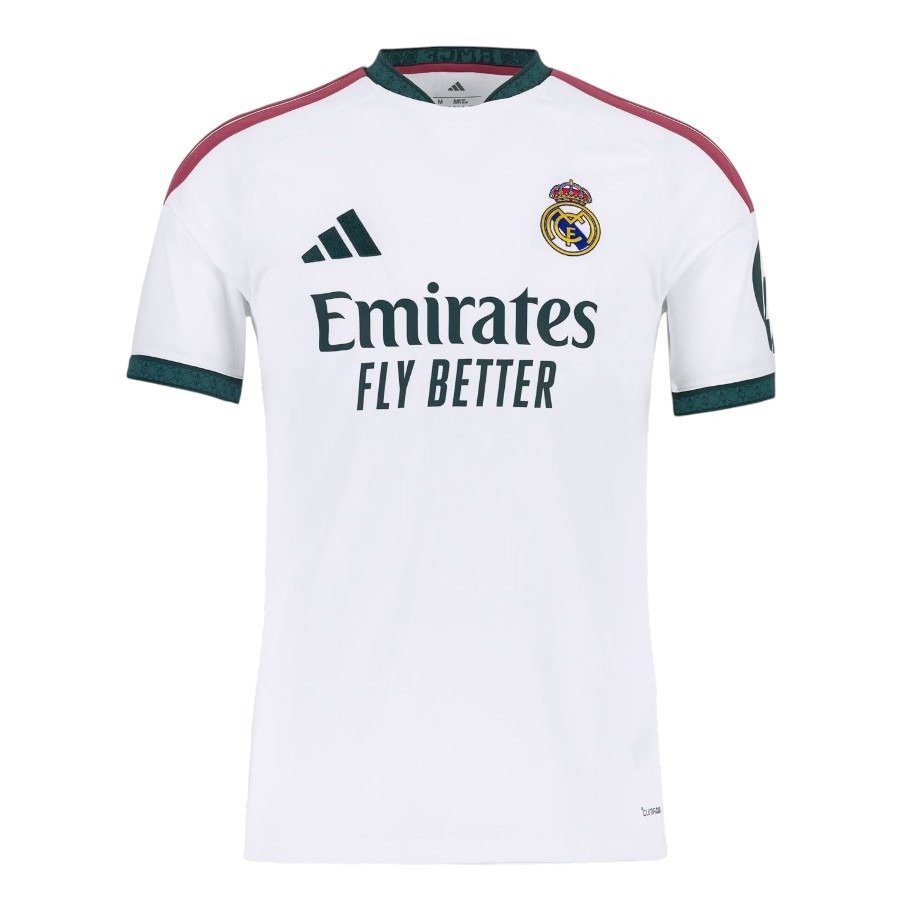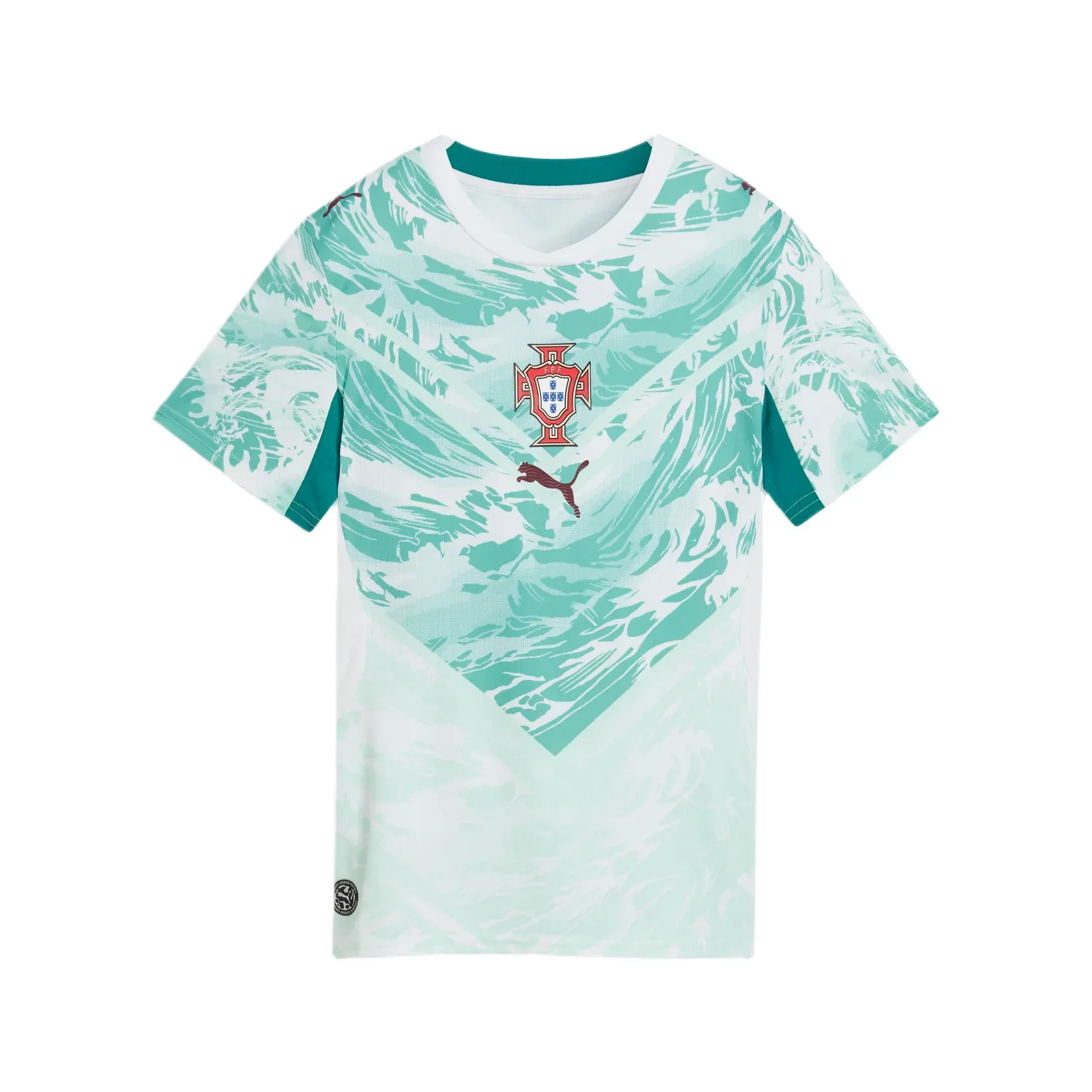
Some footballers are remembered for a single shirt. Eusebio is remembered for two: the red shirt of Benfica and the red shirt of Portugal. In both, he wore the number 10, and in both he played football that made stadiums rise to their feet. Known as the Black Panther for his speed, his power and his grace, Eusebio was one of the greatest players of the twentieth century — and his shirts are among the most collected in the game.
From Mozambique to Lisbon
Eusebio da Silva Ferreira was born in 1942 in Lourenco Marques, the capital of Portuguese Mozambique, now Maputo. He grew up playing barefoot football in the streets, and by his late teens he was the most talked-about young player in Africa. Benfica spotted him, brought him to Lisbon in 1961, and within months he was playing in the European Cup final.
That first season set the pattern for everything that followed. Eusebio scored twice in the 1962 European Cup final as Benfica beat Real Madrid 5-3 in Amsterdam. He was nineteen years old, playing against the greatest club side in Europe, and he was the best player on the pitch. The red Benfica shirt, with its white trim and the eagle crest, became his home for the next fourteen years.
The red shirt of Benfica
Benfica’s home shirt has always been red, and in Eusebio’s era it was a plain, heavy cotton shirt with a white collar — a simple design that let the football do the talking. Eusebio wore the number 10 in that shirt, and he turned it into a symbol. He scored goals from everywhere: long-range shots that seemed to bend the net, headers, free kicks, and runs that started in his own half and ended with the ball in the top corner.
He won the European Cup in 1962, reached three more European Cup finals, and won eleven league titles with Benfica. He was the top scorer in the Portuguese league seven times. For Benfica supporters, the number 10 red shirt will always be Eusebio’s shirt first and everyone else’s second. It is one of the most famous club shirts in football history, and it is still one of the most sought-after retro designs today.
The Ballon d’Or and the Black Panther
In 1965 Eusebio won the Ballon d’Or, awarded to the best player in Europe. It was the peak of his powers, and it confirmed what everyone who had watched him already knew: there was no player in Europe quite like him. His nickname, the Black Panther, captured his style perfectly — a burst of speed, a sudden change of direction, and a finish struck with astonishing power.
What made Eusebio special was not just the goals. He played with joy. He smiled when he scored, he applauded opponents who beat him fairly, and he carried himself with a humility that made him loved far beyond Portugal. When he died in 2014, Portugal declared three days of national mourning, and his statue outside Benfica’s Estadio da Luz became a place of pilgrimage for fans from all over the world.
The 1966 World Cup: nine goals and a Golden Boot
Eusebio’s greatest tournament was the 1966 World Cup in England. Portugal had never played at a World Cup before, and few expected them to go far. Eusebio had other ideas. He scored nine goals in six matches, winning the Golden Boot as the tournament’s top scorer.
The most famous match was the quarter-final against North Korea. Portugal went 3-0 down inside twenty-five minutes, and the tournament looked over. Then Eusebio took over. He scored four goals as Portugal came back to win 5-3, one of the greatest comebacks in World Cup history. Portugal eventually finished third, beating the Soviet Union in the third-place play-off, and Eusebio’s number 10 Portugal shirt — red, with the green and red shield of the Portuguese crest — became a classic.
What made the number 10 shirt special
The number 10 has always belonged to the playmakers, the players who make things happen. Eusebio wore it as a striker, and he redefined what the number could mean. His shirt was not just a number on a back; it was a promise that something extraordinary could happen at any moment.
For collectors, the Eusebio-era Portugal and Benfica shirts are the holy grail of 1960s football shirts. They are simple designs — red shirts, white trim, a crest — but they carry the weight of a player who changed what people thought football could be. A modern fan-inspired version in the same colours is a way to wear that history without needing a museum piece.
Eusebio’s legacy in the shirts we wear today
Every great number 10 since Eusebio has played in his shadow. The Portuguese players who followed him — from Rui Costa to Luis Figo to Cristiano Ronaldo — all wore the same red shirt, and all of them knew whose footsteps they were following. The Portugal shirt today, with its red base and green trim, is a direct descendant of the shirt Eusebio wore in 1966.
That is the power of a great football shirt. It connects generations. A father who watched Eusebio and a son who watches Portugal today can wear the same colours and share the same pride. The shirt is the thread that ties them together.
Collecting an Eusebio shirt
If you are building a collection of iconic player shirts, an Eusebio shirt belongs near the top of the list. Look for the deep red of the Benfica home shirt or the Portugal national-team shirt, and pair it with the number 10. It is a shirt that works as a display piece, as a matchday shirt, and as a conversation starter — everyone who knows football knows the Black Panther.
You can find the Portugal 2026 World Cup Jersey in the ElevenKick shop, along with the rest of our national team jerseys. Wear the red, wear the number 10, and remember the Black Panther.