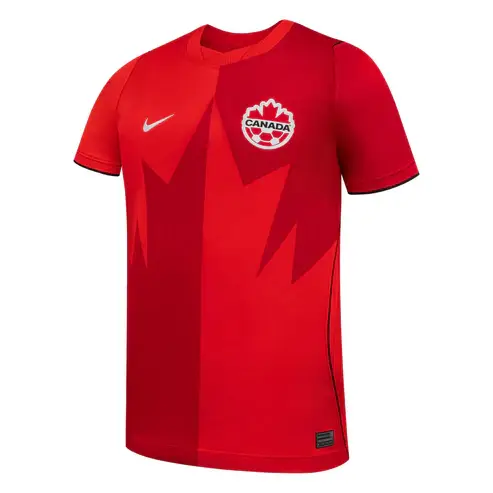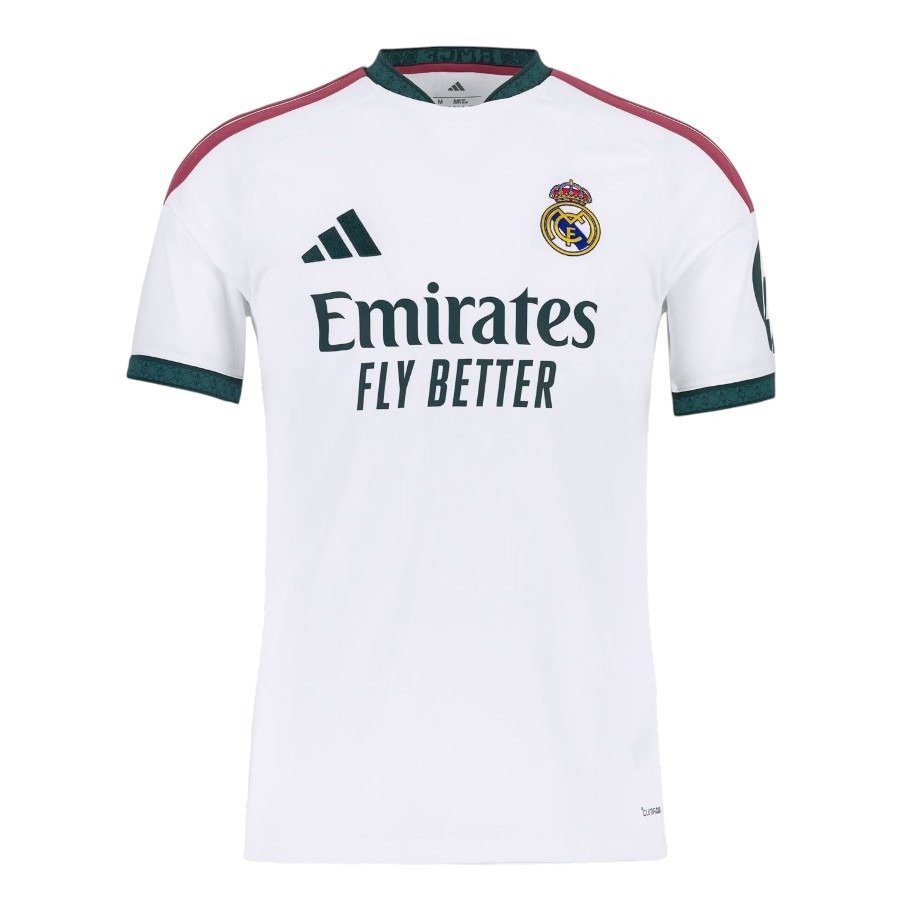
Ferenc Puskas scored 84 goals in 85 games for Hungary and 242 goals in 262 games for Real Madrid. He won an Olympic gold medal, three European Cups, and five league titles, and he did it all with a left foot that defenders feared and a body that looked nothing like a modern athlete’s. He was nicknamed the Galloping Major, and his number 10 shirt is one of the most famous in football history. This is the story of the Ferenc Puskas soccer jersey, the number 10 shirts of a player who changed what a striker could be.
The Galloping Major
Ferenc Puskas was born in Budapest in 1927, and he grew up playing football in the streets of the Kispest district. He joined the local club, Kispest AC, which later became Budapest Honved, the army team, and that is where his nickname came from: he held the rank of major in the Hungarian army, and he ran like a galloping horse, so the Galloping Major it was. He was short, stocky, and famously fond of food, and he looked nothing like the athletes of today. But he had a left foot that could do things no other player could do. His shooting was ferocious, his passing was precise, and his ability to find space in a crowded penalty area was unmatched.
Puskas made his debut for Hungary in 1945, when he was 18, and he never looked back. In 85 internationals he scored 84 goals, a record that still stands as one of the great scoring feats in international football. He was the captain and the inspiration of the Mighty Magyars, the Hungarian team of the early 1950s that was the best in the world. His number 10 shirt, the deep red of Hungary, became a symbol of that team, and of a style of football that was years ahead of its time.
The Mighty Magyars and the red shirt
The Hungary team that Puskas led was a revolution. They played a fluid, attacking game built on quick passing, constant movement, and a deep-lying centre-forward in Nandor Hidegkuti, a role that confused every defence they faced. They won the Olympic gold medal in Helsinki in 1952, beating Yugoslavia 2-0 in the final. They beat England 6-3 at Wembley in 1953, the first foreign team ever to win there, and then beat England 7-1 in Budapest the following year. They went 32 matches without defeat, and they were the clear favourites for the 1954 World Cup in Switzerland.
The red shirt of Hungary was the shirt of champions, and Puskas was its most famous wearer. His goals in that shirt were extraordinary: long-range shots, delicate chips, powerful drives from outside the area, and a first-time finish that seemed to find the corner every time. He was not fast, and he was not tall, but he was always in the right place, and his left foot was the most feared weapon in world football. When he wore the red number 10 shirt, Hungary believed they could beat anyone.
The final that got away
The 1954 World Cup final in Switzerland was supposed to be the crowning moment for Puskas and Hungary. They had beaten West Germany 8-3 in the group stage, and the final was expected to be a formality. But Puskas was carrying an ankle injury from that group game, and he was not fully fit. Hungary went 2-0 up in eight minutes, and then West Germany came back to win 3-2 in the rain in Bern, in what became known as the Miracle of Bern. Puskas thought he had equalised in the final minute, but his goal was ruled out for offside, a decision that is still disputed in Hungary today.
It was the only competitive match the Mighty Magyars ever lost, and it was the last great moment of that team. Puskas never won a World Cup, and the defeat in Bern haunted him for the rest of his life. But the red shirt he wore in that final, and in all the great victories before it, remains one of the most famous shirts in football history.
Exile and a second career at Real Madrid
In 1956, the Hungarian uprising was crushed, and Puskas left his country. He was banned from football for a period, and by the time Real Madrid signed him in 1958, he was 31 years old, overweight, and written off by most observers. Real Madrid did not care. They gave him the white shirt, the number 10, and a place alongside Alfredo Di Stefano, and Puskas repaid them with one of the great second acts in football history.
In eight seasons at Real Madrid, Puskas scored 242 goals in 262 games. He won three European Cups, in 1959, 1960, and 1966, and five league titles in a row, from 1961 to 1965. The partnership with Di Stefano, the Argentine playmaker who wore number 9, was one of the great attacking partnerships in the history of the game: Di Stefano the creator, Puskas the finisher, both wearing the famous white shirt. Puskas was no longer the galloping young captain of Hungary, but he was still the most dangerous striker in Europe, and his left foot was still the most feared weapon in the game.
The 1960 final: four goals at Hampden Park
The greatest night of Puskas’s Real Madrid career came on 18 May 1960, in the European Cup final against Eintracht Frankfurt at Hampden Park in Glasgow. Real Madrid won 7-3, in front of 127,000 people, in a match that many still call the greatest club game ever played. Puskas scored four goals. Di Stefano scored three. The white shirt that night, worn by two of the greatest players who ever lived, became a legend.
It was the perfect expression of what Puskas could do. His first goal was a fierce shot from the edge of the area. His second was a header. His third was a volley. His fourth was a calm finish after a run through the defence. Four different kinds of goal, all in one match, all in the biggest game in club football. When people talk about the greatest individual performances in a final, Puskas at Hampden Park is always near the top of the list.
The Puskas Award and a lasting legacy
Puskas retired in 1966 and became a coach, working in Spain, Greece, and Australia, among other places. He died in Budapest in 2006, and he was given a state funeral in Hungary, a hero’s farewell for a man who had been a hero twice over: first for Hungary, then for Real Madrid. In 2009, FIFA named its award for the best goal of the year after him, the FIFA Puskas Award. Every year, the most beautiful goal in world football is given his name, and that is a fitting tribute: Puskas scored some of the most beautiful goals the game has ever seen, and his name is now attached to beauty itself.
For collectors, the Puskas shirt is a piece of history. The red number 10 of Hungary is the shirt of the Mighty Magyars, the greatest team that never won a World Cup. The white number 10 of Real Madrid is the shirt of three European Cups and the greatest final ever played. Both are shirts that tell a story, and both are shirts that belong in any serious collection of football history. Browse the Real Madrid shirts at ElevenKick at https://elevenkick.com/product-category/la-liga/real-madrid/, see the current home shirt at https://elevenkick.com/product/real-madrid-soccer-jersey-home-custom-shirt-2025-26/, and find the shirt that fits your collection at the ElevenKick shop at https://elevenkick.com/shop/.