
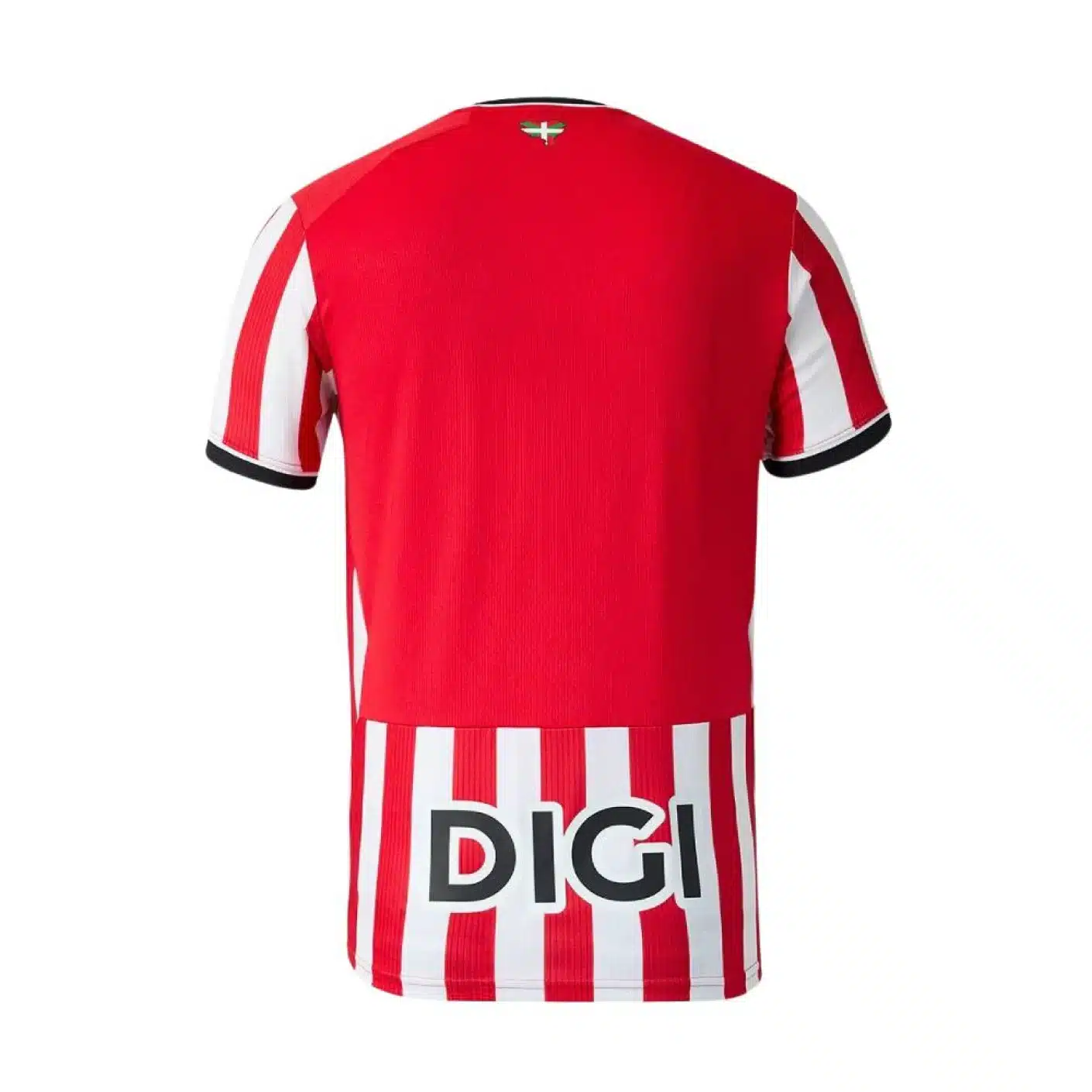
The red and white striped shirt of Athletic Bilbao is one of the most recognisable in world football. It belongs to a club that plays by its own rules, in a stadium its fans call a cathedral, and it has never once been relegated from Spain’s top flight. This is the story of the famous red and white shirt — and the club that refuses to change for anyone.
A club founded by British workers and Basque students
Athletic Club was founded in Bilbao in 1898, making it one of the oldest football clubs in Spain. The city was a busy industrial port, and British shipyard workers and miners brought the game with them from England. Basque students returning from their studies in Britain brought it too, and the two groups came together to form a club that has kept its identity ever since. Bilbao sits in the Basque Country in northern Spain, and that Basque identity is at the heart of everything the club does. The red and white shirt is not just a kit — it is a statement about where the club comes from and who it represents.
Why red and white stripes?
Athletic did not always wear red and white stripes. The club’s first shirts were white, and for a time the team wore a half blue and half white shirt. The famous stripes arrived in 1910, and the story behind them is one of football’s best-loved tales. A club member named Juan Elorduy travelled to England to buy new shirts and came back with red and white striped shirts, the same colours worn by Sunderland. Whether he chose them deliberately or simply bought what was available, the stripes stuck. Red and white became the club’s colours, paired with black shorts, and they have stayed that way for more than a century. Today the stripes are so tied to the club that the team is known across Spain as the Rojiblancos, the red and whites.
The Basque-only policy
What truly sets Athletic Bilbao apart is its player policy. Since 1912 the club has fielded only players who were born in the Basque Country or who learned their football there. No other club at the top level of European football works this way. The policy means Athletic cannot simply buy a star from another country when the team needs strengthening. Instead the club depends on its academy, Lezama, one of the most respected youth systems in Spain, and on the Basque clubs and schools that feed it. Critics have called the policy a handicap. Athletic’s answer is its record: the club has played every single season of La Liga since the league began in 1929 and has never been relegated. Only Real Madrid and Barcelona can say the same. The shirt, then, is earned in a way no other shirt is — every player who wears it is a product of the Basque Country.
San Mames, the cathedral
Athletic play at San Mames, a stadium the fans call La Catedral, the cathedral. The old San Mames stood on the same site from 1913 until 2013, and the new stadium, opened in 2013, kept the name and the spirit. On matchdays the ground is a wall of red and white, and the atmosphere is among the loudest in Spain. The club’s anthem is sung before kick-off, and the supporters, known for their loyalty, fill the stadium week after week. The players are called Los Leones, the Lions, after the lion that stands beside the church of San Mames — Saint Mammes was a martyr thrown to the lions, and the name stuck. When a young player makes his first appearance, the tradition is that he kisses the grass. It is a club built on ritual, and the shirt is part of it.
The trophies behind the stripes
Athletic’s trophy cabinet is far fuller than many fans outside Spain realise. The club has won La Liga eight times, most recently in the 1983-84 season under the coach Javier Clemente, when a tough, physical side beat Barcelona and Real Madrid to the title. The Copa del Rey is where Athletic’s history really shines: the club has lifted the cup 24 times, more than any Spanish club except Barcelona. The most recent win came in 2024, when Athletic beat Mallorca on penalties in Seville to end a 40-year wait for a major trophy. The captain, Iker Muniain, lifted the cup in front of thousands of travelling fans, and the celebrations in Bilbao lasted for days. The club has also won the Spanish Super Cup, most recently in 2021, and reached the Europa League final in 2012. For a club that signs only Basque players, that record is remarkable.
Telmo Zarra and the great names
No story of the Athletic shirt is complete without Telmo Zarra. The striker played for the club from 1940 to 1955 and scored 251 league goals, a figure that stood as a Spanish record for decades. He won the Pichichi Trophy as La Liga’s top scorer six times, more than any other player in history. Zarra’s name is still sung at San Mames, and the trophy for the top-scoring Spanish player in La Liga each season is named after him. Other great names in the shirt include the goalkeeper Jose Angel Iribar, who played more than 600 games for the club, Julen Guerrero, the elegant midfielder of the 1990s, and Andoni Goikoetxea, the defender whose tough tackling became legend. In recent years the Williams brothers, Inaki and Nico, have carried the shirt forward — both came through Lezama, and Nico became a star of Spain’s national team. Every generation produces its own hero, and every hero comes from the same place.
What makes the shirt so collectable?
For collectors, the Athletic Bilbao shirt is special for several reasons. First, the design barely changes: red and white vertical stripes, black shorts, a look that has been recognisable for over a century. That makes every season’s shirt instantly identifiable as Athletic, and older shirts age gracefully. Second, the club’s story gives the shirt meaning — it is not just a design, it is a symbol of a unique way of running a football club. Third, the shirts of the great players, from Zarra to the Williams brothers, carry real history. A fan choosing an Athletic shirt is choosing a club with a clear identity, and that is exactly what makes it a strong addition to any collection. The home shirt is the classic: bold red and white stripes. The away shirt usually plays with the same colours in a different arrangement, often darker, and is worth a look for fans who want something a little different.
How to wear the Athletic shirt
The red and white stripes are bold, so the shirt works best with simple clothes around it. Dark jeans or black shorts let the stripes do the talking, and a plain jacket over the top keeps the look smart enough for a day out. On a matchday at San Mames, the shirt goes with a scarf in the same colours and nothing else is needed. For fans wearing it away from the stadium, the stripes pair well with neutral colours — navy, black, white or grey — and the shirt’s strong design means it never needs busy patterns next to it. It is a shirt made to be seen, and it looks best when it is the loudest thing in the outfit.
Why the red and white shirt endures
Football changes fast: clubs change owners, change colours, change identities. Athletic Bilbao has changed almost nothing. The same stripes, the same stadium name, the same policy, the same anthem. That is why the shirt matters. It is proof that a club can compete at the highest level without giving up who it is, and that a simple red and white striped shirt can carry more meaning than the most expensive design in the game. Whether you support Athletic, admire the club from afar, or simply love a great football shirt, the red and white stripes deserve a place in your collection.
Browse the Athletic Bilbao shirts in the Athletic Bilbao collection at the ElevenKick shop and find the red and white stripes that have stood for Bilbao since 1910.

