
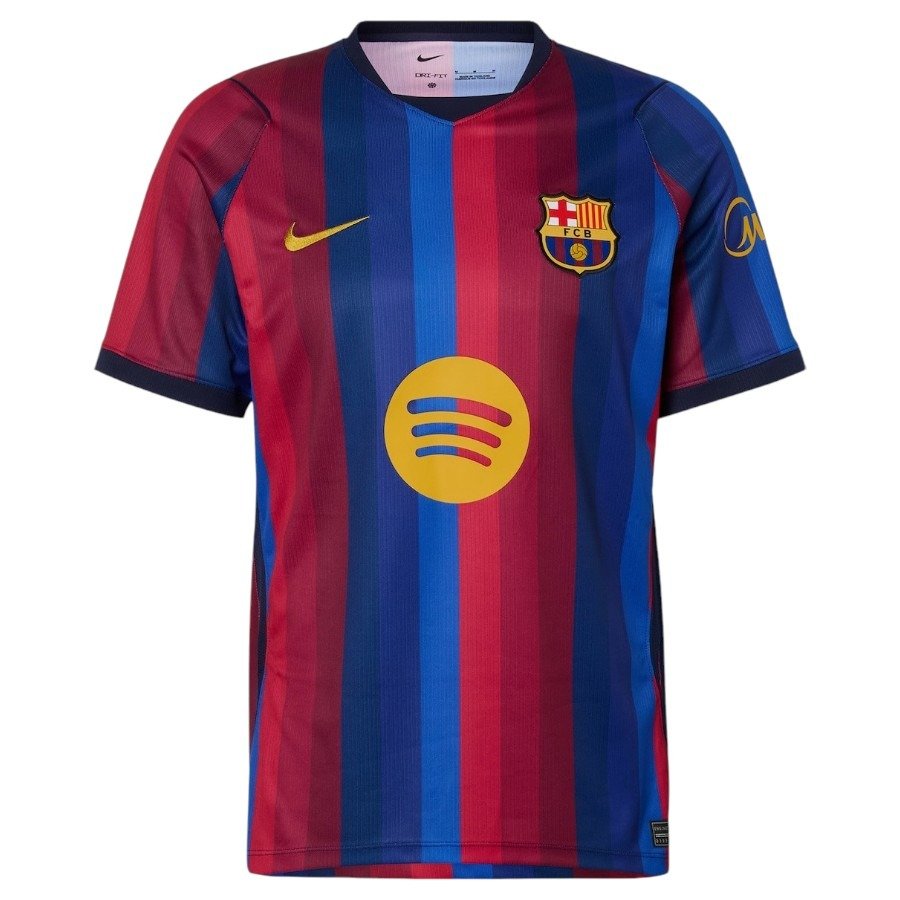
Few things are more annoying for a football fan than a favourite jersey with a peeling print. The name on the back starts to lift at the corners, a number cracks and flakes, or the sponsor logo on the chest begins to curl away from the fabric. It happens to almost every printed shirt sooner or later — heat, washing and everyday wear all take their toll on the vinyl or heat-transfer prints used on modern jerseys. The good news is that a peeling print does not have to mean the end of the shirt. In many cases, you can fix it at home in a few minutes. Here is how.
Why prints peel in the first place
Most modern soccer jerseys use heat-transfer vinyl or printed transfers for names, numbers and sponsor logos, rather than the stitched embroidery used on older shirts. These prints are bonded to the fabric with heat and adhesive, and that bond weakens over time. The most common causes are heat and friction: tumble drying on a high setting, ironing directly over the print, washing in very hot water, and the constant rubbing of a print against a bag strap, a seatbelt or another layer of clothing.
Age matters too. Even a perfectly cared-for shirt will see its prints loosen after years of wear and washing — the adhesive simply dries out. That is normal, and it is not a sign that the shirt is poor quality. It is a sign that the shirt has been worn and loved, which is exactly what a football shirt is for.
First step: stop the damage
Before you try to fix anything, take a moment to assess the print. If only a corner or an edge is lifting, you can usually save it. If the print is cracked across its whole surface, flaking off in pieces, or has already come away in large sections, a repair is much harder — and sometimes the honest answer is to accept the wear as part of the shirt’s story, or to retire the shirt to display rather than daily wear.
Whatever you do, do not peel the loose section off further to “see how bad it is”. Every millimetre you pull away makes the repair harder. Leave the lifting edge exactly where it is, and work with it, not against it. Also, wash the shirt before you repair it — a clean, dry surface bonds far better than a dirty one — and let it dry completely. Never try to fix a print on a damp shirt.
Method 1: the low-heat iron fix
The most reliable home repair for a lifting print is also the simplest: re-bond it with gentle heat. You will need an iron, a sheet of baking paper (parchment paper) or a thin cotton cloth, and a flat, hard surface like an ironing board or a table with a towel over it.
Lay the shirt flat with the peeling section facing up. Place the baking paper or cloth over the print — never put the iron directly on the print itself, as direct heat can melt the vinyl or scorch the design. Set the iron to a low or medium heat with the steam off. Press the iron down firmly on the covered print for 10 to 15 seconds, then lift it and let the area cool for a few seconds. Repeat two or three times, checking after each press whether the edge has stuck back down.
Patience matters here. Too much heat will melt the print and make things worse, and too little will not re-activate the adhesive. Low heat, short presses, and a protective layer between the iron and the print is the combination that works. Once the edge is flat again, leave the shirt untouched until it is completely cool — the bond sets as the adhesive cools.
Method 2: fabric glue for stubborn edges
If the iron method does not fully hold a corner down, a small amount of fabric glue can finish the job. Choose a flexible fabric adhesive — the kind made for clothing, not a general-purpose craft glue, which dries stiff and can crack. Apply a tiny amount under the lifting edge with a toothpick or a cotton bud, press the edge flat, and hold it in place for a minute or two. Then lay the shirt flat and place a heavy book on top of the repaired area for a few hours while the glue sets.
Less is more with fabric glue. A thin line under the edge is all you need; too much will squeeze out around the sides and leave a visible, shiny residue. And never use a hot glue gun on a jersey — the heat is too intense and the glue too rigid for flexible sportswear fabric.
What not to do
There are a few common mistakes that turn a small peel into a ruined print. Do not iron directly on the print without a protective layer. Do not use the highest heat setting “to make it stick faster” — it will melt the vinyl. Do not tumble dry the shirt after a repair for at least 24 hours, and ideally air dry it from then on. Do not use superglue on a jersey print: it dries hard and brittle, it can stain the fabric, and it will crack the first time the shirt flexes. And do not keep peeling at a loose edge out of habit — every tug weakens the bond further.
When to leave it alone
Sometimes the best repair is no repair. If a shirt is a genuine vintage piece — a 1990s original, a match-worn shirt, or a rare retro design — any home fix risks reducing its value and its authenticity as a collector’s item. In those cases, the peeling is part of the shirt’s history, and collectors expect it. Frame it, display it, and enjoy it as it is.
The same applies if the print is badly cracked across its full surface. A heat press can re-bond a lifting edge, but it cannot restore a design that has already broken into flakes. For a shirt you still want to wear, a professional printing shop can sometimes replace a name or number entirely — ask a local shop that works with sportswear, and make sure they use the right materials for your shirt’s fabric.
Preventing peeling in the future
Prevention is easier than repair. Wash printed jerseys inside out, in cold water, on a gentle cycle. Air dry them instead of using a tumble dryer, and keep them out of direct sunlight when drying. Never iron directly over a print — always iron the shirt inside out, or place a cloth between the iron and the design. And when you store a jersey, fold it rather than hanging it by the shoulders, so the weight of the fabric does not pull at the prints over time.
A peeling print is frustrating, but it is also fixable — and it is a sign of a shirt that has been worn, washed and loved, which is exactly what a football shirt is for. With a little care, most peeling prints can be pressed back into place, and a few simple habits will keep your other shirts looking sharp for years. You can browse our full collection of fan-inspired jerseys at the ElevenKick shop.

